Category: Articles

  • Critical pedagogy

    All the properties in Studio Properties are phenomena you might encounter in a design studio in an educational institution. Some of them you might never have experienced, and some you might encounter every day.

    Some are different, in the sense that they are properties of many educational environments, not just studio. In the cluster Cultures and Power the property Critical Pedagogy rests on extensive bodies of knowledge from a range of educational contexts.

    Critical pedagogy names and addresses the inequities and injustices in education. It is an approach to education that regards teachers and students as equally responsible for co-creating the curriculum. Fundamentally, critical pedagogy seizes the political potential of education as means of liberating both teachers and students from forms of oppression.

    Like many teachers who identify with the tenets critical pedagogy, I first encountered Paulo Freire’s Pedagogy of the Oppressed as a student, in my case during a seminar course at the University of Sheffield taught by Rosie Parnell, now Professor of Architecture and Pedagogy at Newcastle University. Rosie included the book as part of a wide ranging reading list that allowed us as Masters students the opportunity to interrogate the extent to which we were in control of the form and content of the knowledge we were learning.

    Freire based his writing on a model of literacy education for rural farmers (far removed from studio education in architecture). Much of what has followed in my subsequent two decades of educational research and practice has been related to a fundamental question: to what extent can architectural education fully engage with the principles of critical pedagogy? And I am living up to the liberatory principles of critical pedagogy in my own teaching?

    What is perhaps most exciting about critical pedagogy in studio is its possibility for supporting teachers and students to collaboratively build a framework for embodied and empathetic action, one which is simultaneously pedagogical and political.

    Educators in design disciplines can engage with the principles and values of critical pedagogy in various ways. As a Masters student, I first started to think practically about applying critical pedagogy to design education during annual live projects at the University of Sheffield School of Architecture. These six-week-long projects introduced groups of students to a real client and community outside the university. Sometimes these groups both designed and built small structures for their clients, but in many cases, their work was focused on researching and presenting feasibility studies or design proposals that the client could then take forward. By developing a response to a real person, a real situation and a real need (as opposed to a theoretical design brief written by a teacher or the student themselves) students are exposed to the complexity and richness of designing in the real world. They develop empathy for the clients and communities they work with, and their design work becomes embodied.

    Live projects were already the subject of doctoral research, notably Rachel Sara who coined the concept of them existing ‘between the studio and the street’. Her work emphasises that while live projects give students an opportunity to design outside the simulacra of design practice in the studio, they also reinvigorate the studio as a place of critical reflection and discussion.

    In my subsequent research, I came to understand live projects as critiques of normative educational models. By engaging students with the world outside the studio, live projects require students to critically examine their assumptions about the knowledge and skills required by the curriculum. 

    As we explain in the property Critical Pedagogy, while critical pedagogy can be a property of studio, it is not an innate property of studio. Furthermore, while certain aspects of critical pedagogy can be found in studio practices and approaches which are widespread – they are not always recognised as such. We have observed many studios operating which seem to be opposed to the principle of teachers and students being co-creators of a curriculum of liberation. This may be understandable – to be a critical pedagogue in studio requires determination to overcome the deeply embedded power structures of the university.

  • Building confidence in studio: How design students find their voice

    Building confidence in studio: How design students find their voice

    Experienced designers know how to present their projects and explain their thinking to clients. The educational design studio is a practice run for that, building not only students’ skills but also their confidence to speak. Instead of clients, students present to tutors, peers, and sometimes even outside guests. As practitioners, tutors or researchers, it’s easy to forget just how intimidating it can be to stand up and talk about your own work. I remember doubting myself in studio, wondering if my idea was any good, if my prototype was worth showing, or if I was even using the right words. That’s why we wrote the Studio Property ‘Confidence to speak’.

    Students pick up the language of design over time. They learn how to talk about their work, the right words to use, and when to use them. The more time you spend in the studio, joining in on chats, crits, and presentations, the more you pick up on the shared language and get the confidence to speak. Just listening in on group crits or watching how others present helps you figure out what’s expected. You compare yourself with others, which is a key property of studio that helps you learn.

    If we want students to feel more confident speaking up in the studio, we as practitioners or educators need to be careful with the words we use. We should use language that matches the group’s level, then slowly bring in more design terms as everyone gets more comfortable. Over time, this helps students shift how they talk about their work.

    One of the good things about design is that it’s all about making and having something visual or physical to talk about makes it so much easier to get a conversation going. Having an artefact to point to or explain helps keep the conversation flowing and gives everyone something to focus on.

    Some students are happy to talk about their work when they’re proud of it, while others might speak up because they’re curious to hear what someone else thinks about their ideas. If you’re skilled at something, you’ll naturally feel more confident, and as you get better, you’ll become more of an expert. But being confident to speak isn’t just about having the right words or a finished project. It’s also about knowing what you’re good at and where you might need a bit more help. Still, the best designers are those who are confident enough to admit when they don’t know something or when they’ve got more to learn. Confidence to speak is about learning to ask the right design questions.

  • Cost-effective studio education is not a finance problem

    Studio costs; it just does.

    Traditional studio spaces (sometimes dedicated 24/7 to individual students or classes), tutors who engage intensively with low numbers of students, studio hours which gobble up chunks of the curriculum, as well as multiple types of technology and tech support – all of these impact higher education budgets without doubt.

    At a time when those budgets are stressed and under scrutiny organizational conversations around managing the cost of studio veer from the “suck it up and rotate (ever larger) classes through the studio space” variety to the “it’s a miracle – student-owned laptops and AI tutors will eliminate equipment and personnel costs” variety. Either of these tends to result in cost cutting measures which, at best, lack nuance and at worst cost more than they were intended to save.

    What could happen if we engaged in such discussions informed by the ways in which properties of studio may be engaged, leveraged or impinged upon as different dimensions of cost are targeted for reform?

    Consider some common efficiency moves regarding the cost of physical space: eliminating the dedicated space traditionally accorded to studio by rotating design students through these spaces for limited “studio periods,” eliminating open-ended studio spaces and moving just tools and equipment to a shared lab visited by students on as as-needed basis, or even taking studio online and eliminating the space requirement altogether. The property foregrounded in such moves may well be Cost, put forward as the argument for getting rid of the spaces. On the other hand, several properties may be used to argue that these spaces are essential. These can include: Place, or the physical and emotional space in which design work happens; Surfaces, which serve both as workspaces and support for creative processes and interactions; and Artefacts, the physical or digital products of the design process, which include not only the students’ work, but the exemplars, materials samples, and a range of objects used in both teaching and learning.

    Assuming good faith intent to address cost dilemmas, what might be some questions raised in a properties-based discussion of, for example, the cost to institutions of physical studio spaces?

    • What are some interdependent properties linked to Surfaces, Artefacts and Places (e.g., Listening in, Confidence to speak, Extended and distributed cognition)?
    • By what means might some of those properties be supported in alternative spaces or digital spaces? (Many are, BTW, in currently realized studio programs and these could be investigated for their perceived or proven efficacy.)
    • Recognizing that these interdependent properties should be supported, what are the relative costs of doing so viably in alternative spaces versus whatever might be the current physical space?

    The outcomes of such discussions might bring to light false economies inherent in some potential solutions to the “cost of studio” dilemma for organizations, mitigating against seemingly obvious but uninformed decisions. Equally, design educators might be able to argue more effectively than dogmatically the complex value to education being realized in a physical studio and possibly to entertain viable – even attractive – alternatives.

    I posit that the question to be asked about the cost of studio is a design question, not essentially a financial one. It is a question posed, as every design question is, within existing limitations, including fiscal limitations. That question is, “how may the complex and interdependent properties of studio education be given effective form?”

  • Lickability, Heft, and Looking Good

    Lickability, Heft, and Looking Good

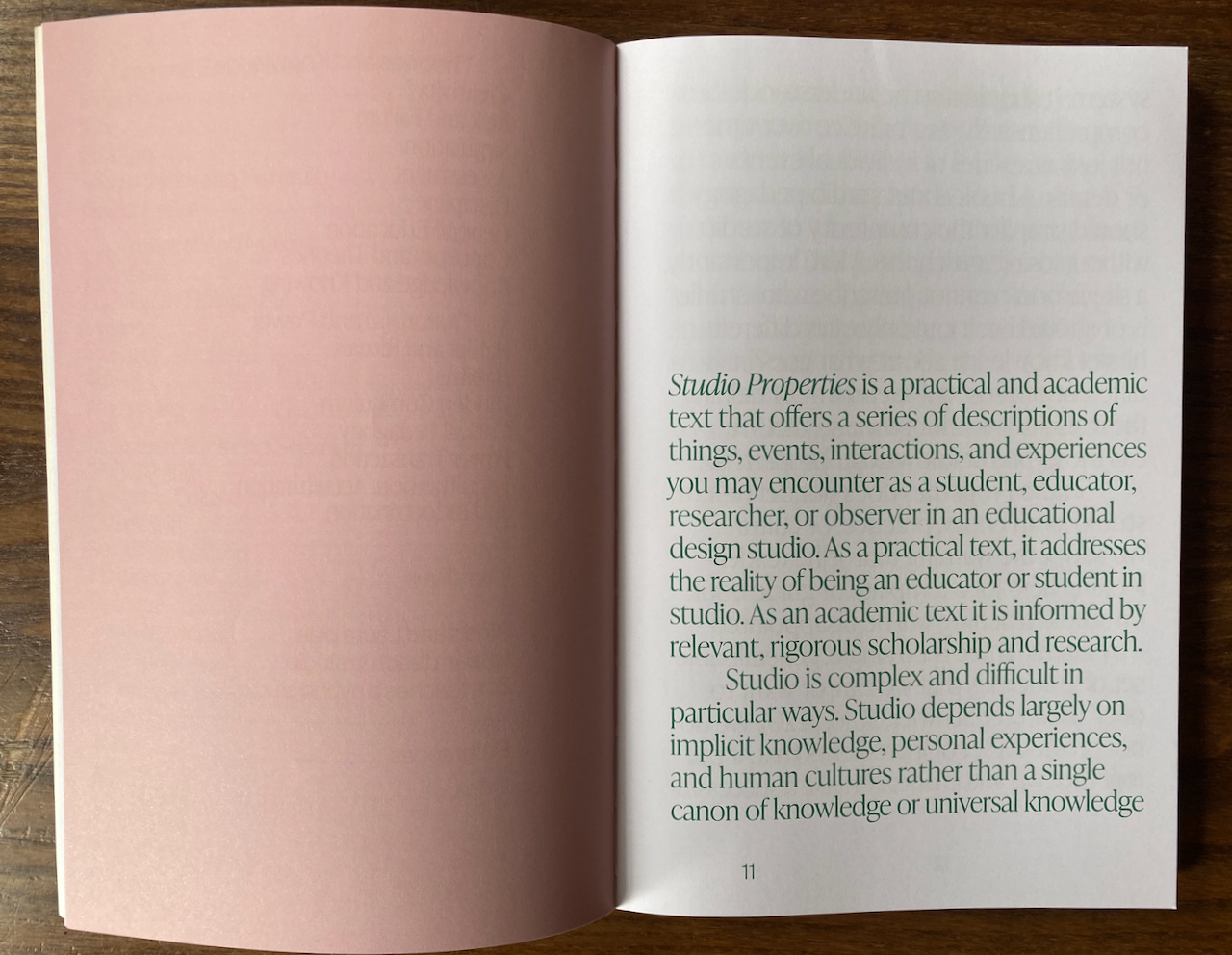
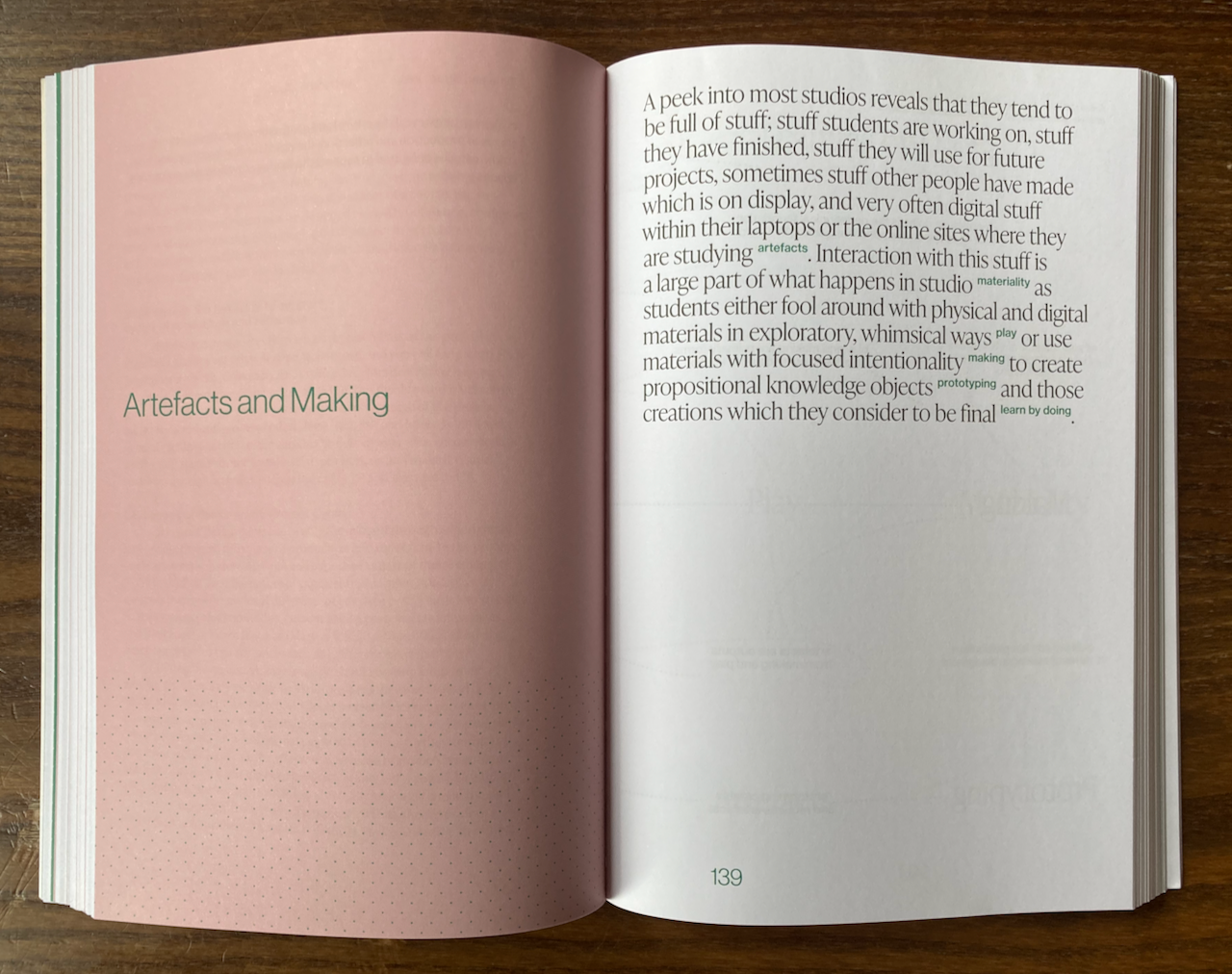
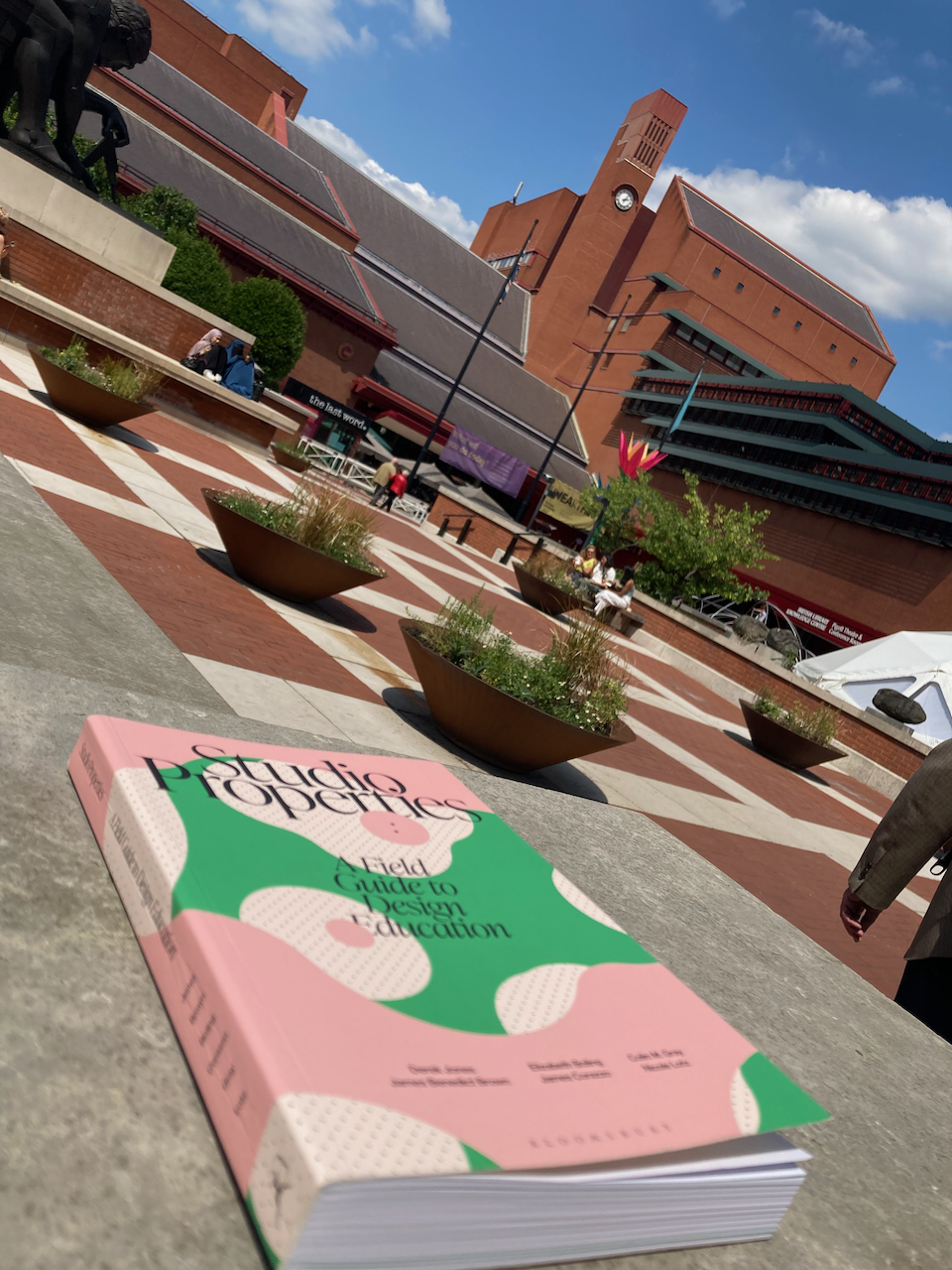
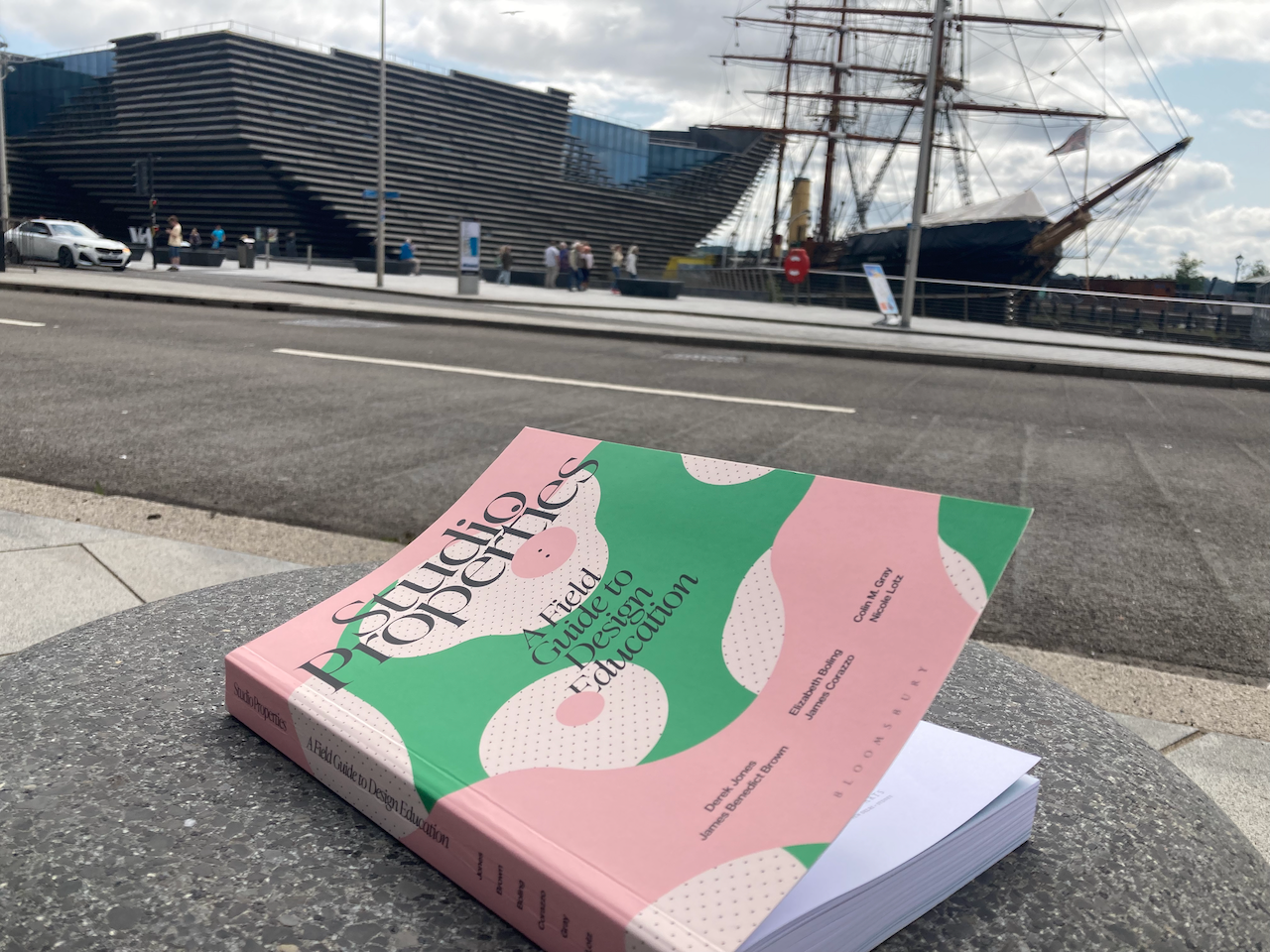
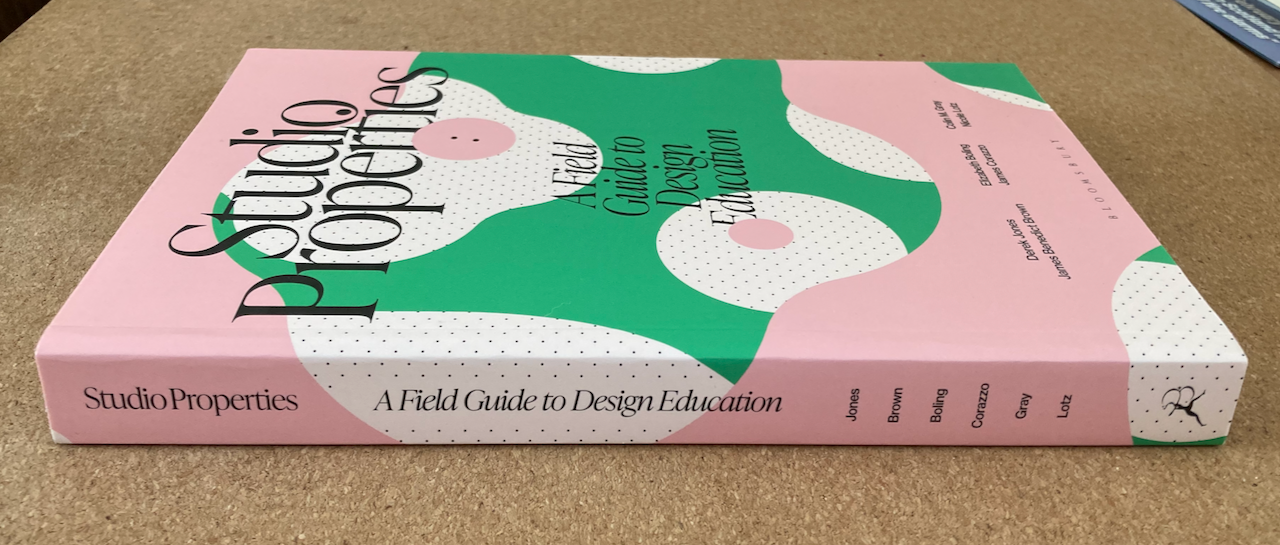
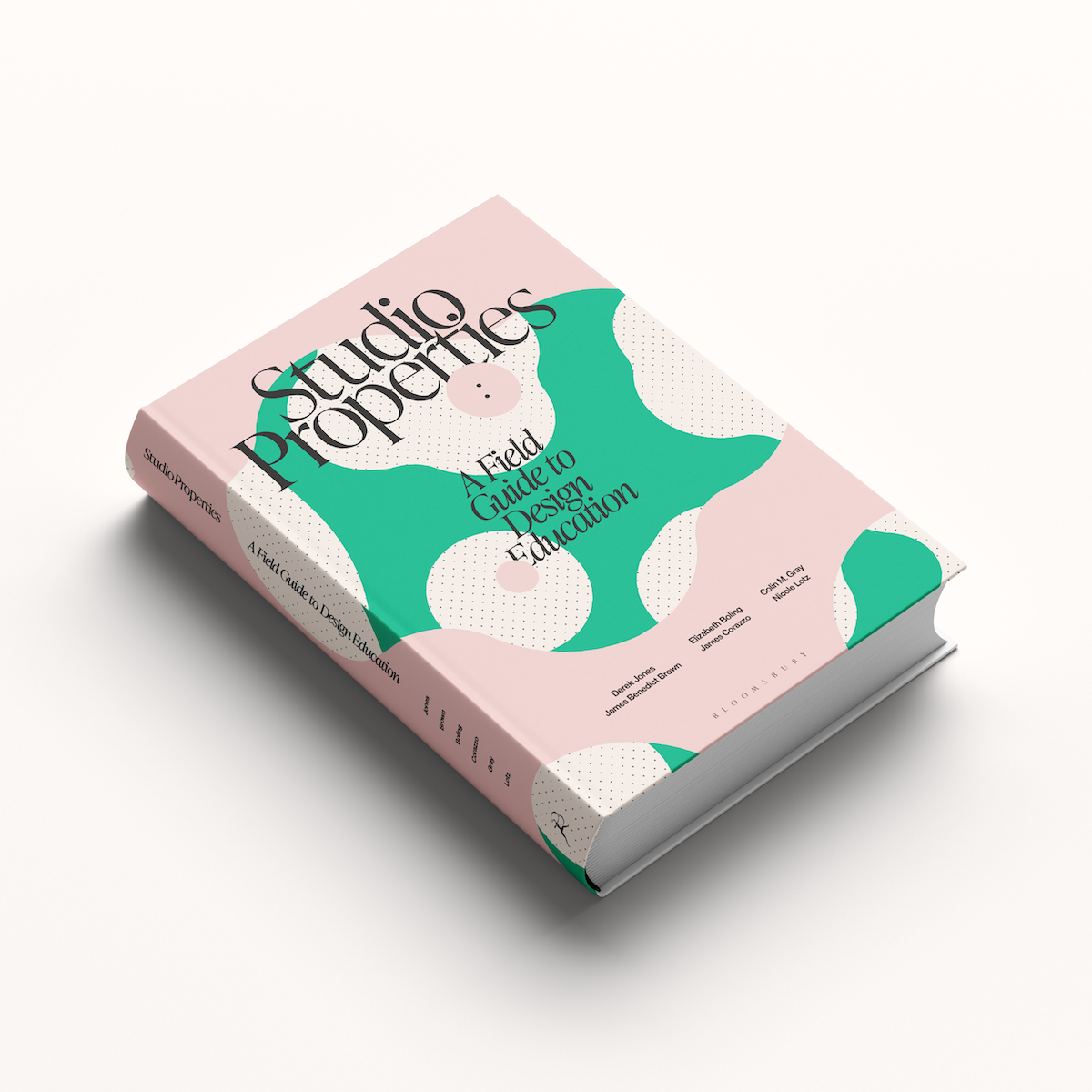
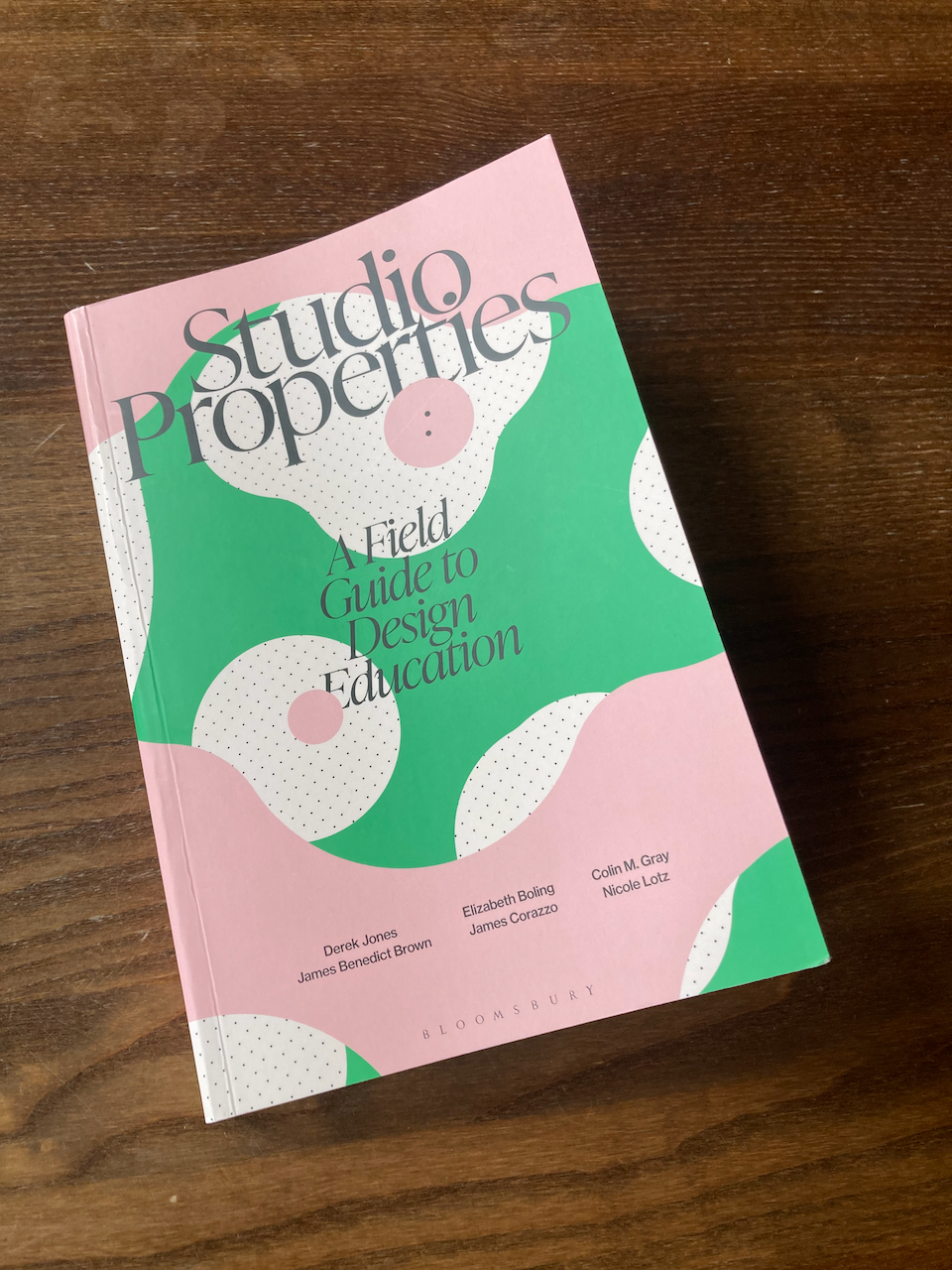
    This is a quick post about the physical book itself: the Artefact [> 151] that is Studio Properties.

    I’m not exaggerating when I say that we spent a long time designing the book. From the start we wanted a book that could be used; that spoke to a design audience; and that was a design Artefact [> 151].

    And I really think we achieved that.

    Here’s a few highlights.

    It just looks good, making it feel good

    Some of the layouts are just stunning examples of that magic that good typography, graphic, and layout design come together.

    They allow space for the type, text, headings, and all that other stuff that makes up a book (this is Page Furniture according to a fellow author … /cough). Studio AW–AR Studio were just awesome at this all the way through.

    Proper book designers are worth it. Who’d have thought.

    It has utility through design

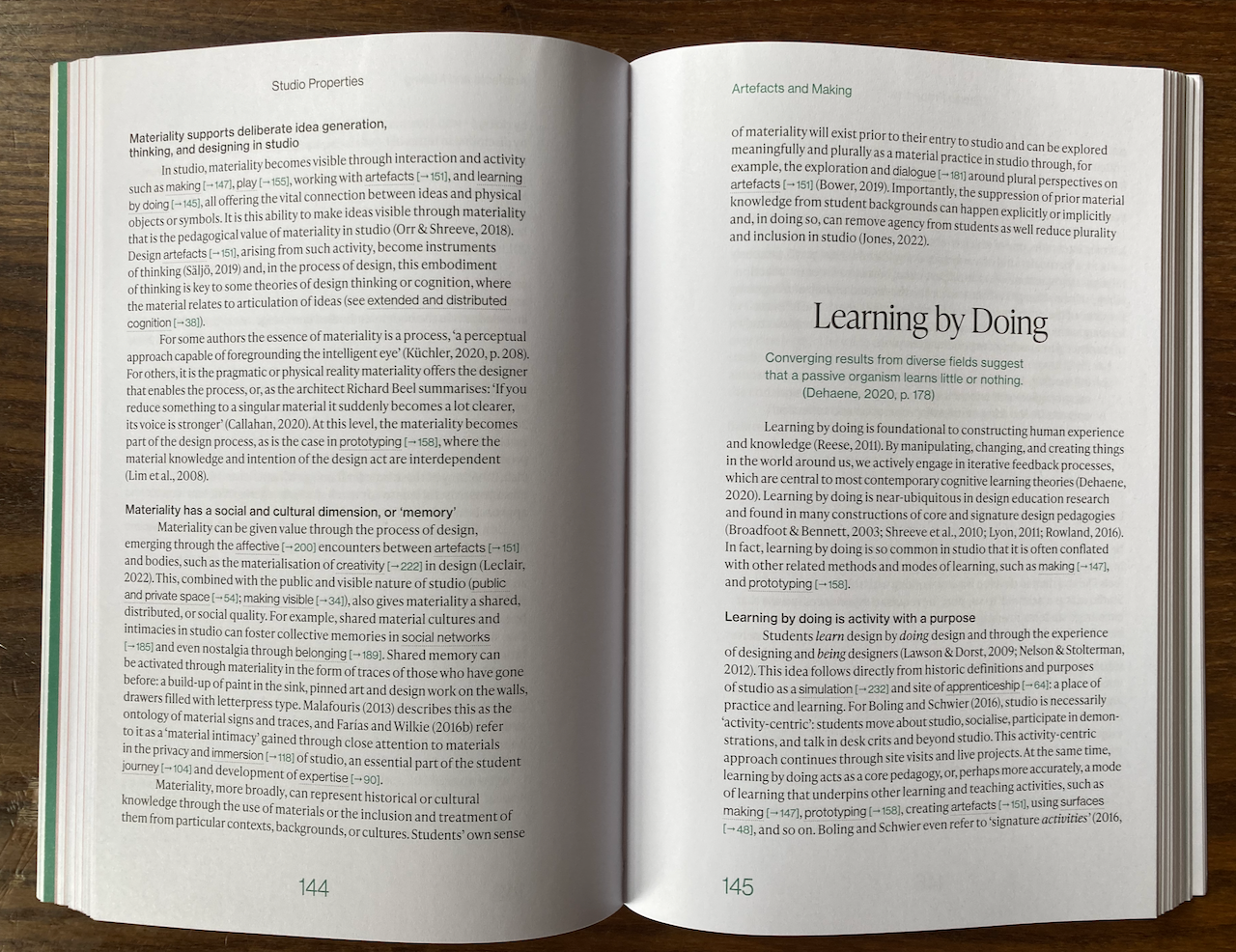
    The book has materiality [> 142] that has been used to make it look great but also have utility through design. Again , this was something we really wanted to happen – it’s a complex book that also must be useable.

    That’s achieved through good design.

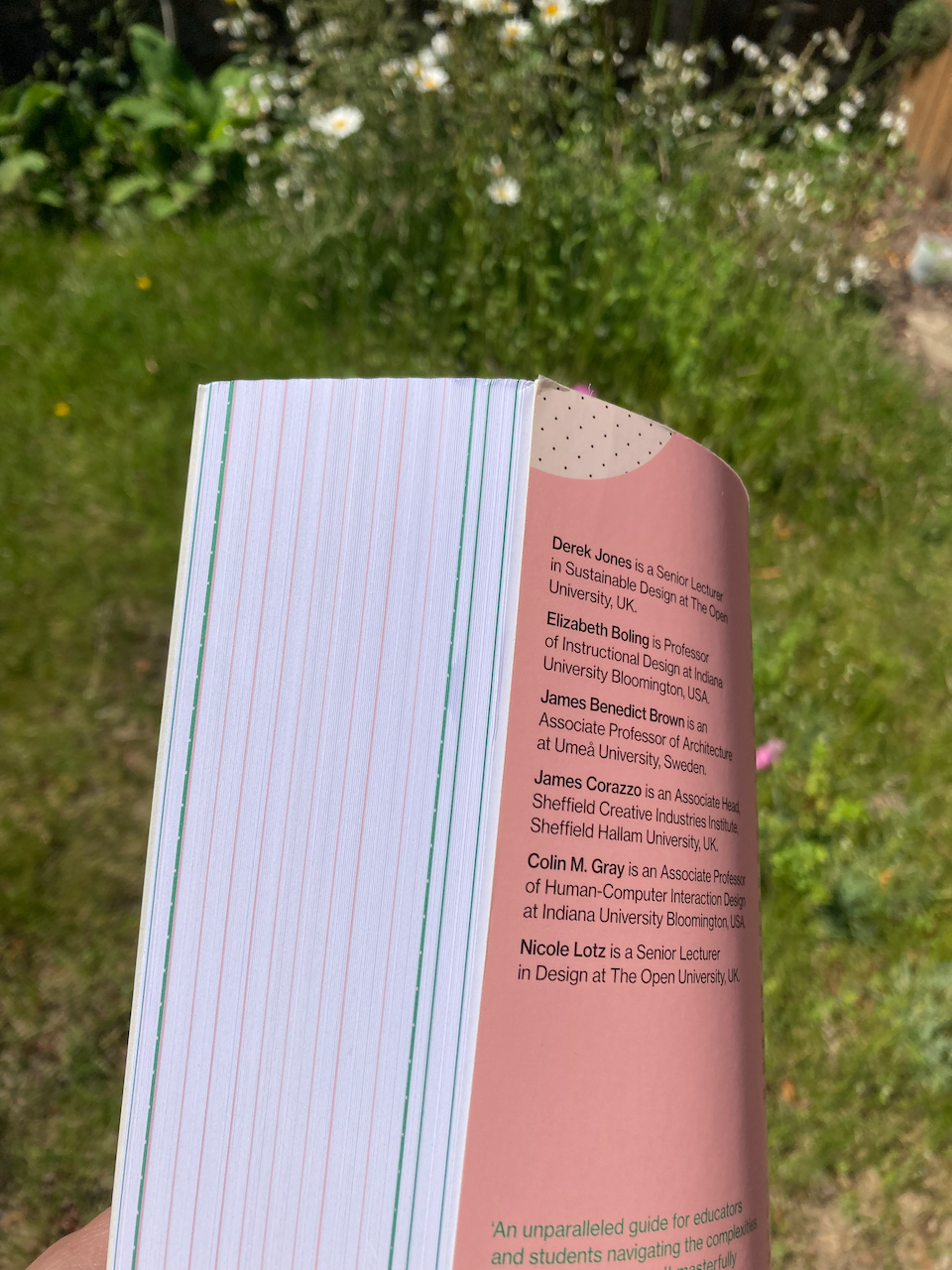
    For example, the way the pages fan and give a clue as to the big structure of the text is lovely. We’d had a notion of doing this from the start but the designers have pulled this off really nicely without it screaming at the reader or getting in the way.

    That subtle pink that emerges when you flick through Studio Properties is tasty.

    Did I mention that it just looks good?

    Speaking of tasty, that pink on the cover is absolutely lickable.

    This is my word and both my fellow authors and spell checker do not like me using it. But I’m with the late Steve Jobs on this: making the book edible makes it touchable; acceptable; and delicious. (my only slight sadness is that the custard and rhubarb colour scheme I voted for was unanimously rejected… I defy you, enemies of progress!)

    Studio Properties is visually edible and digestible.

    It feels meaty

    Finally, I’d like to talk about heft. In the context of book design, I’m going to trademark the term Heft ™ as “The appropriate weight for a given set of content in a given knowledge context”.

    We had well over 100 properties at one point and, besides the wonderful Bloomsbury pointing out the 7 volume absurdity of this, I am glad we ended up with what we did. It’s a perfect starting point because it’s just right: it’s a lot of material but it doesn’t feel like too much (and I really love the spine design…).

    Studio Properties has a Heft (and Girth) appropriate as to its position in design education research…


    OK, that’s probably enough now. I can hear the other authors at the door, begging me to stop typing and step away from the laptop.

    Buy a physical copy of the book if you can to truly appreciate the tastiness, digestibility, and heft of Studio Properties!

    Studio Properties is available to pre-order from Bloomsbury.

  • Defining studio (not)

    Defining studio (not)

    One of the biggest challenges in writing Studio Properties was trying to define studio without, well … defining it.

    Studio is made up from a whole set of tacit, cultural, and emergent bits and pieces that make it difficult to be explicit about. You cannot define or measure studio in certain ways, such as specifying how it should be formed with any confidence of outcome.

    At the same time, this very un-definability is often argued to be a key thing that makes studio what it is. Studio is not something created by following a set of explicit instructions; it is something that emerges from setting up initial conditions and then responding to situations along a set of guides, norms, cultures, and so on.

    So how do you balance saying something about something that cannot be defined?

    What we settled on was avoiding this question completely and basing the work on what others said about studio!

    OK, we didn’t completely avoid it. But having the Guiding Principle of using existing scholarship and research was an important part of the work.

    First, this gave us a condition to work to, allowing us to make progress without it being right or correct from the start. Instead, allowing judgement to be part of the definition of the knowledge itself.

    Second, it highlighted how much knowledge is already out there and that we’re not always aware of. We ended up citing 700+ articles, books, and other pieces of writing. The references section is nearly 10% of the book!

    For me, this last point was a real reminder that others have come before us and said a lot of useful stuff that should not just be ignored. (of course, there is also a lot of stuff that needs to be read with updates…).

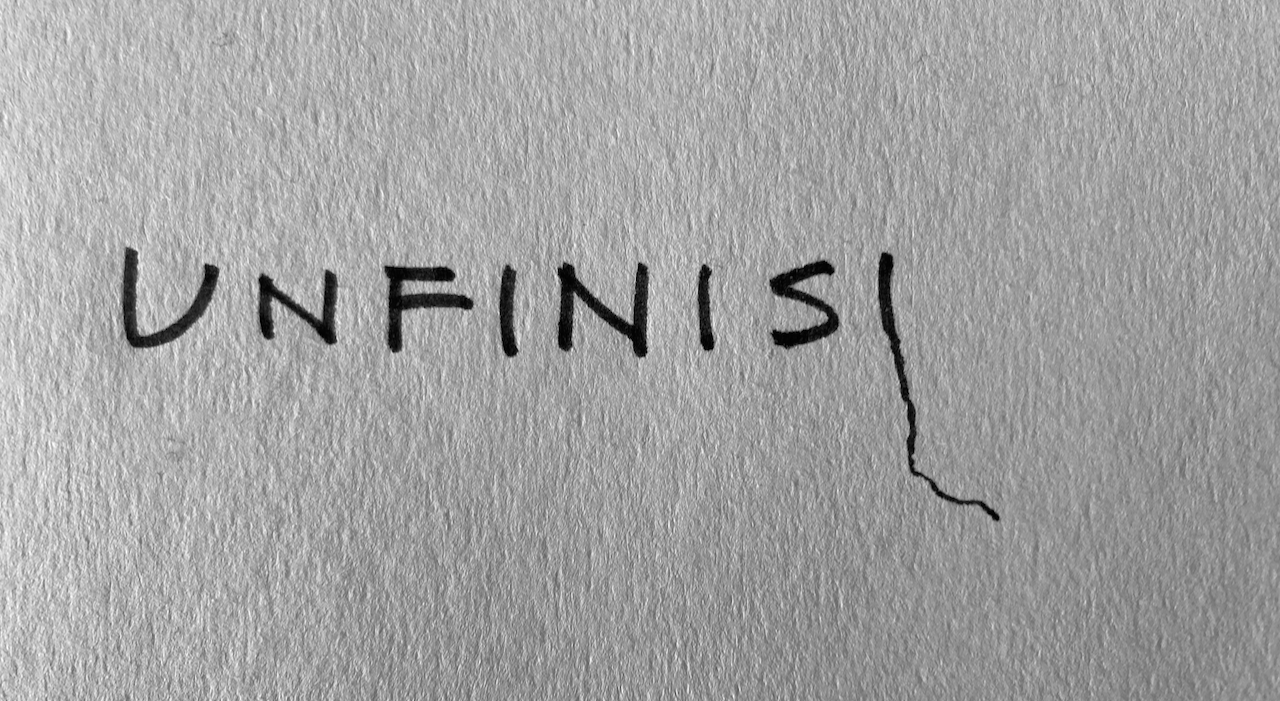
    Of course, it also means that this book is not a final thing either – Studio Properties is also the start of a studio in itself. It is not a definition and that means that it is also incomplete.

    Personally, that’s one the things I’m most looking forward to as an author: the fact that the work is unfinished and that other work might build on it, transform it, or even replace it.

    Or it might just be an early Pitch for Studio Properties 2 …

  • About the book: Contents

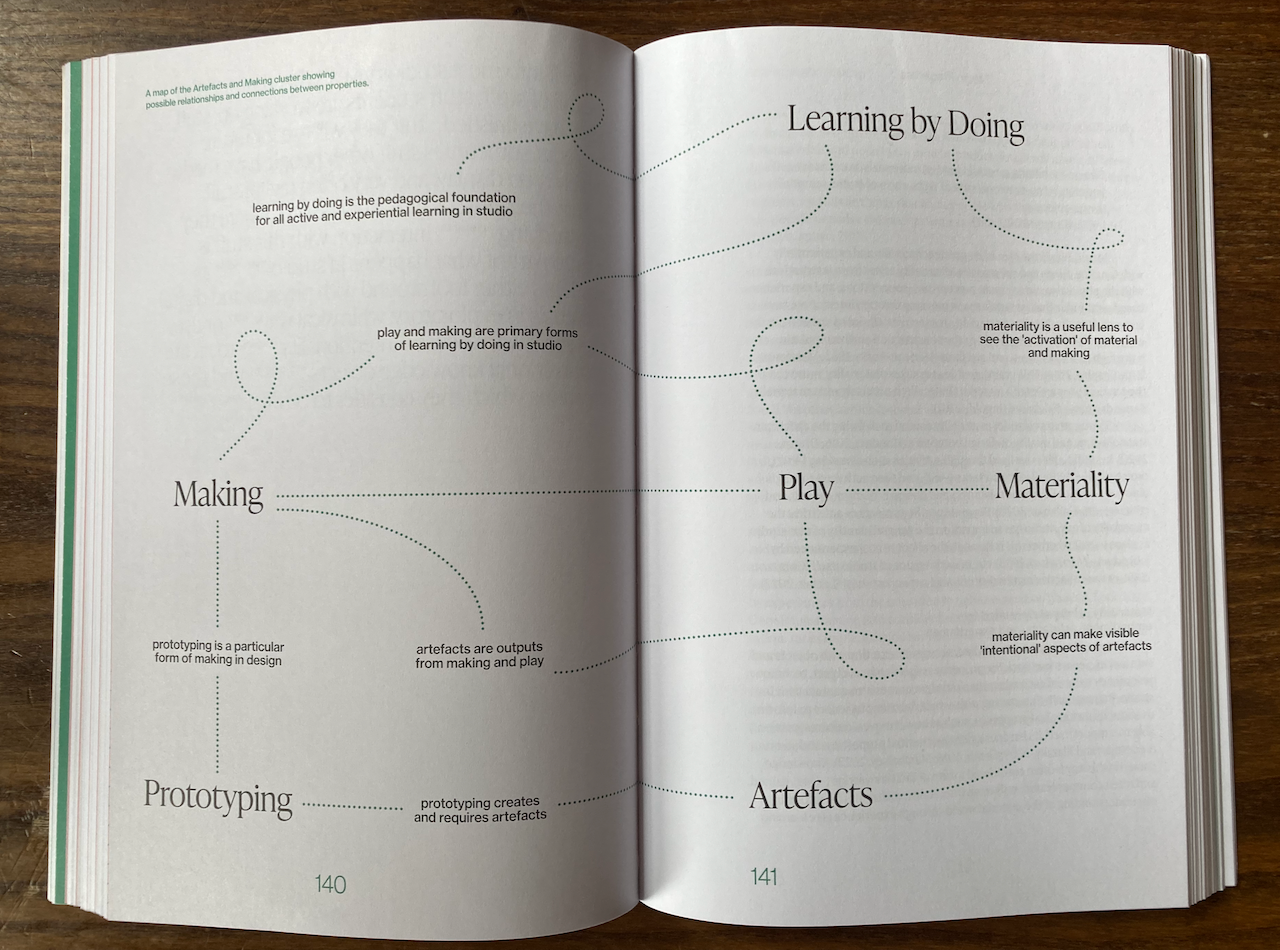
    The book comprises properties, clusters, and narratives. Properties describe things, events, interactions, or experiences in studio education. Clusters are groups of properties that are thematically related. Narratives offer a first-person account of studio, and have been created to provide insight into how properties interrelate, overlap and depend on one another.

    Each offers a different way to view, explore, and understand studio through its parts.

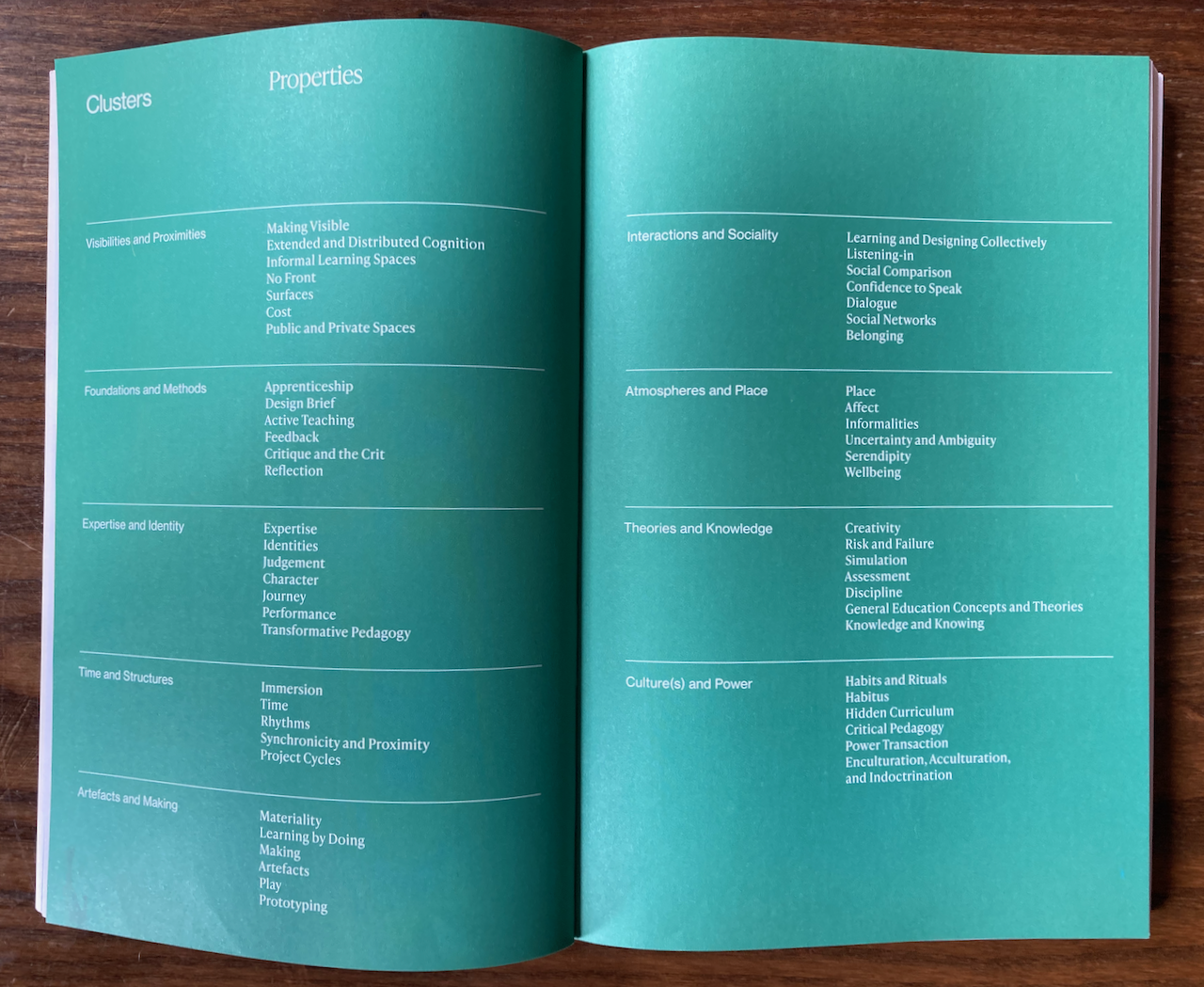
    To give you an idea of how these go together, here’s the list of properties and clusters from the book.

    Visibilities and Proximities

    Making Visible
    Extended and Distributed Cognition
    Informal Learning Spaces
    No Front
    Surfaces
    Cost
    Public and Private Spaces

    Foundations and Methods

    Apprenticeship
    Design Brief
    Active Teaching
    Feedback
    Critique and the Crit
    Reflection

    Expertise and Identity

    Expertise
    Identities
    Judgement
    Character
    Journey
    Performance
    Transformative Pedagogy

    Time and Structures

    Immersion
    Time
    Rhythms
    Synchronicity and Proximity
    Project Cycles

    Artefacts and making

    Materiality
    Learning by Doing
    Making
    Artefacts
    Play
    Prototyping

    Interactions and Sociality

    Learning and Designing Collectively
    Listening-in
    Social Comparison
    Confidence to Speak
    Dialogue
    Social Networks
    Belonging

    Atmospheres and Place

    Place
    Affect
    Informalities
    Uncertainty and Ambiguity
    Serendipity
    Wellbeing

    Theories and Knowledge

    Creativity
    Risk and Failure
    Simulation
    Assessment
    Discipline
    General Education Concepts and Theories
    Knowledge and Knowing

    Culture(s) and Power

    Habits and Rituals
    Habitus
    Hidden Curriculum
    Critical Pedagogy
    Power Transaction
    Enculturation, Acculturation, and Indoctrination

  • Welcome to Studio Properties

    Welcome to Studio Properties

    Welcome to the Studio Properties website.

    There is something special about a studio as a place of practice and learning.

    That quote is from the back of the book, and it encapsulates many of the ideas and motivations behind Studio Properties.

    Studio is special because it has been maintained as a human practice for thousands of years. It’s a particular place and pedagogy that operates in a distinct way. However, as a place of practice and learning, it also evolves and adapts to those participating in it and the contexts in which it operates.

    That makes it both really complex and really simple. Complex because it’s people, place, values, cultures, customs, and the usual human stuff. Simple, because it is what it is, and educators just get on with educating the next generation of designers.

    So, writing a book that attempts to preserve both characteristics was an important challenge for us as authors. We hope we’ve found the right balance in how we’ve presented studio – as a series of properties, not as a definition.

    We hope you enjoy the book and find it as useful as we have in developing our studio teaching. If you have, then please get in touch to let us know.