Author: Derek Jones

  • Lickability, Heft, and Looking Good

    Lickability, Heft, and Looking Good

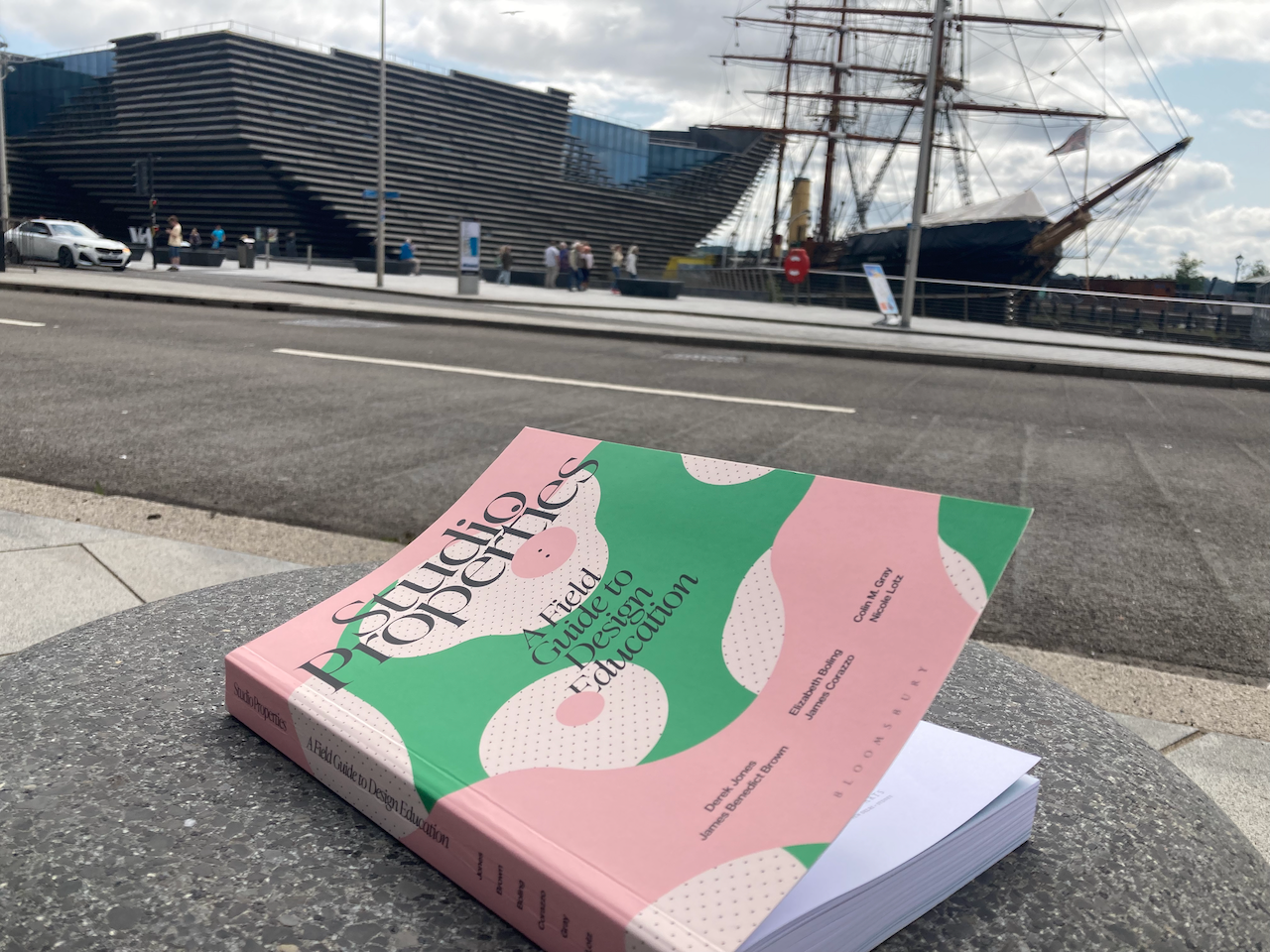
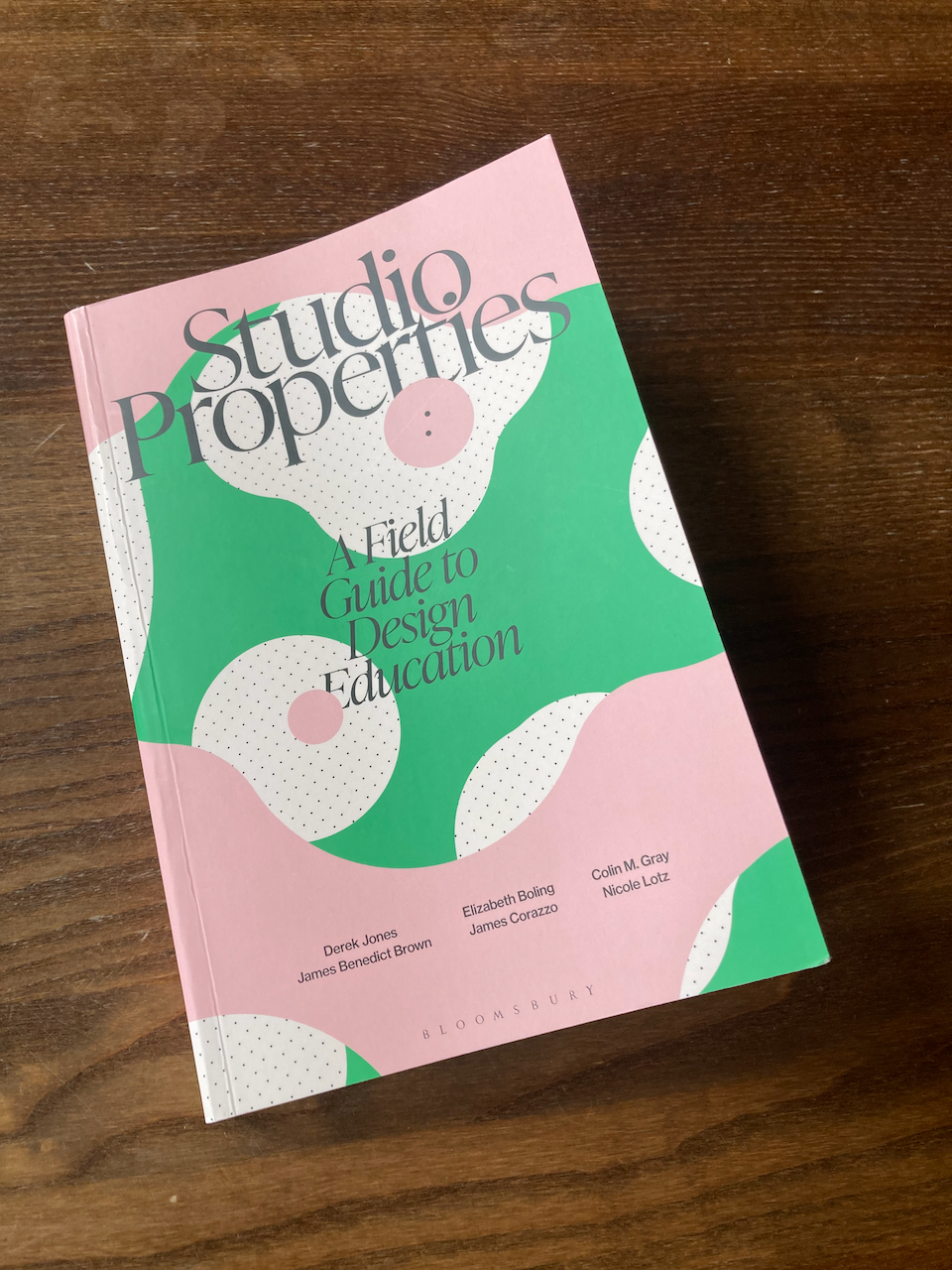
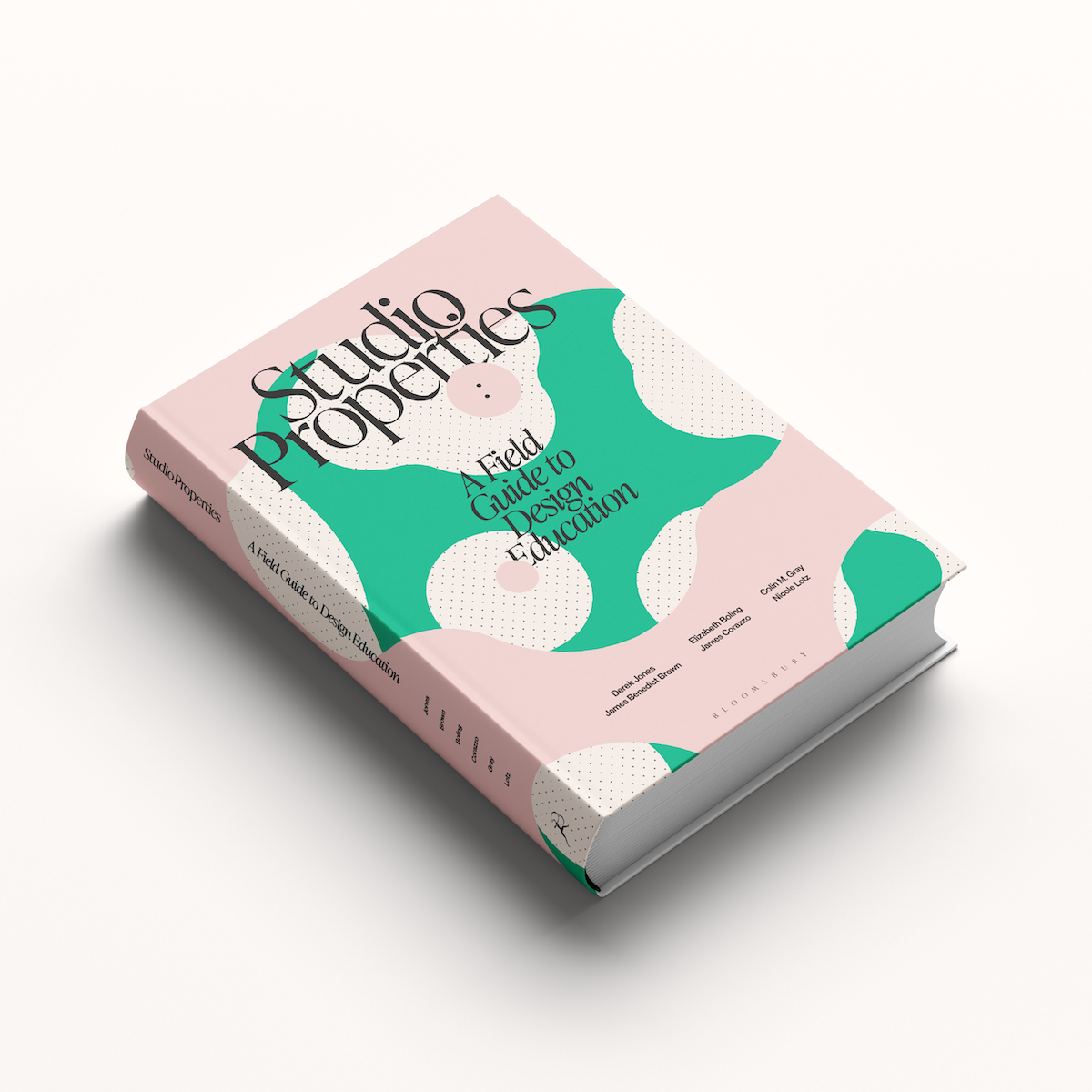
    This is a quick post about the physical book itself: the Artefact [> 151] that is Studio Properties.

    I’m not exaggerating when I say that we spent a long time designing the book. From the start we wanted a book that could be used; that spoke to a design audience; and that was a design Artefact [> 151].

    And I really think we achieved that.

    Here’s a few highlights.

    It just looks good, making it feel good

    Some of the layouts are just stunning examples of that magic that good typography, graphic, and layout design come together.

    They allow space for the type, text, headings, and all that other stuff that makes up a book (this is Page Furniture according to a fellow author … /cough). Studio AW–AR Studio were just awesome at this all the way through.
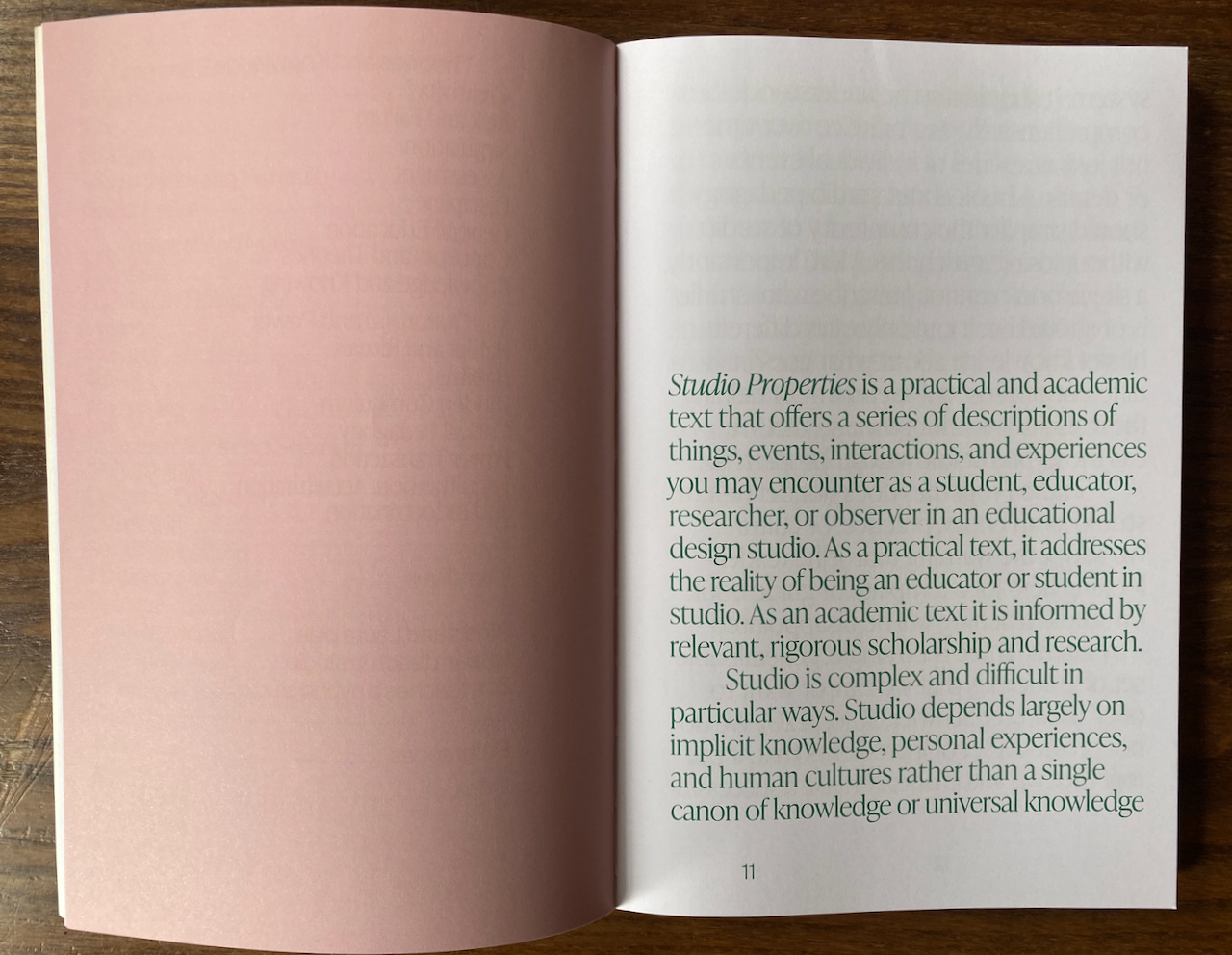
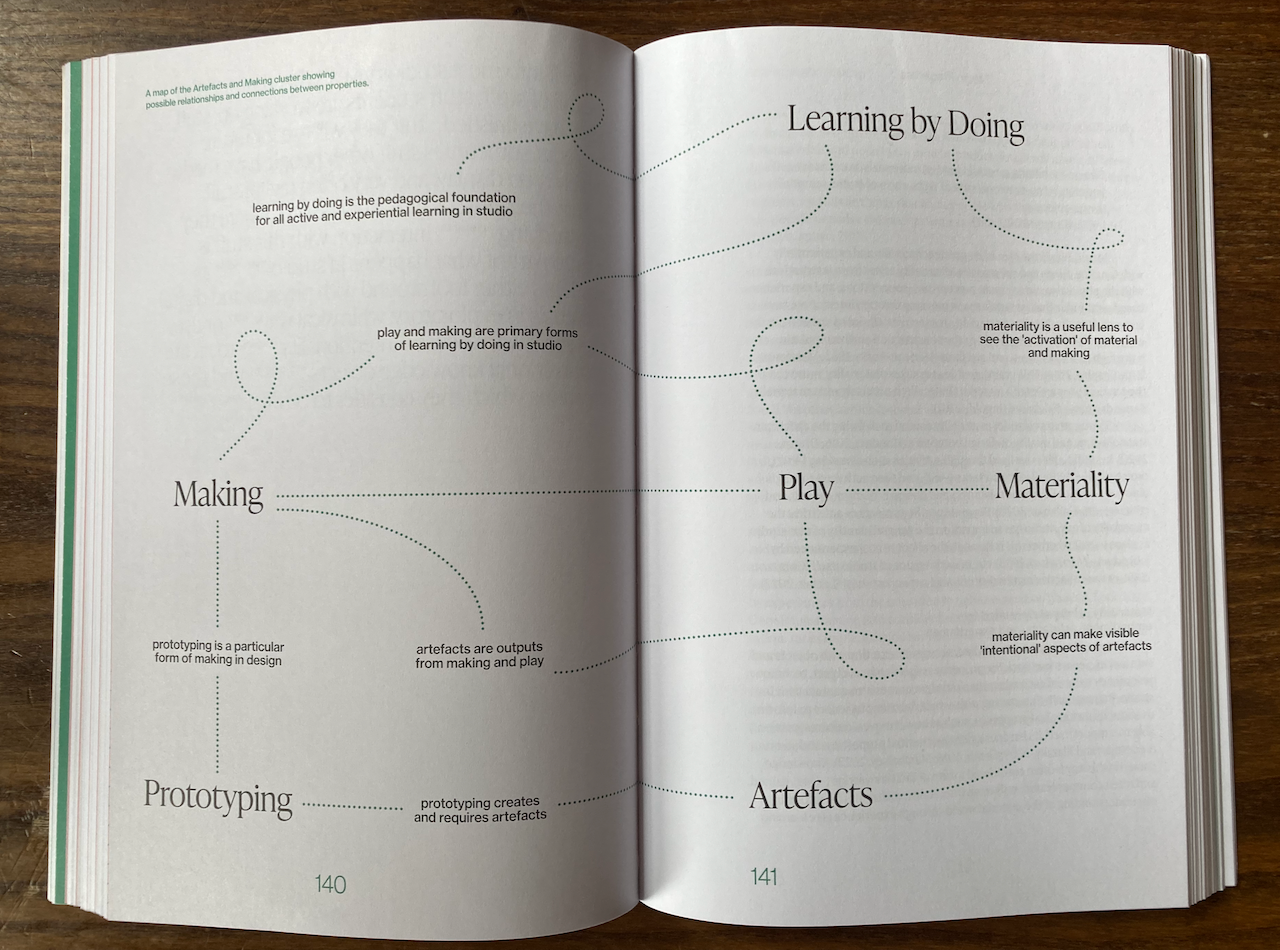
    Proper book designers are worth it. Who’d have thought.

    It has utility through design

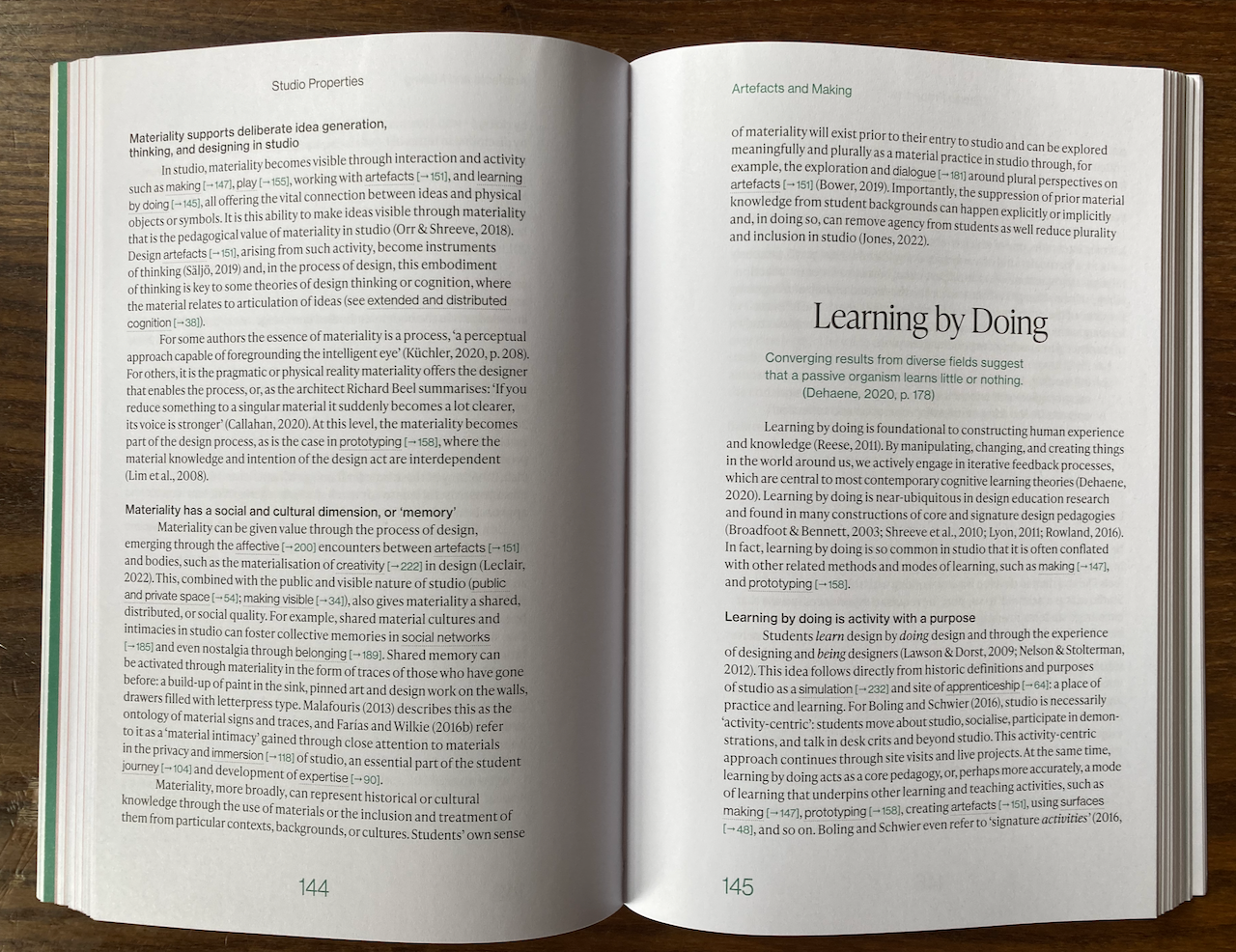
    The book has materiality [> 142] that has been used to make it look great but also have utility through design. Again , this was something we really wanted to happen – it’s a complex book that also must be useable.

    That’s achieved through good design.

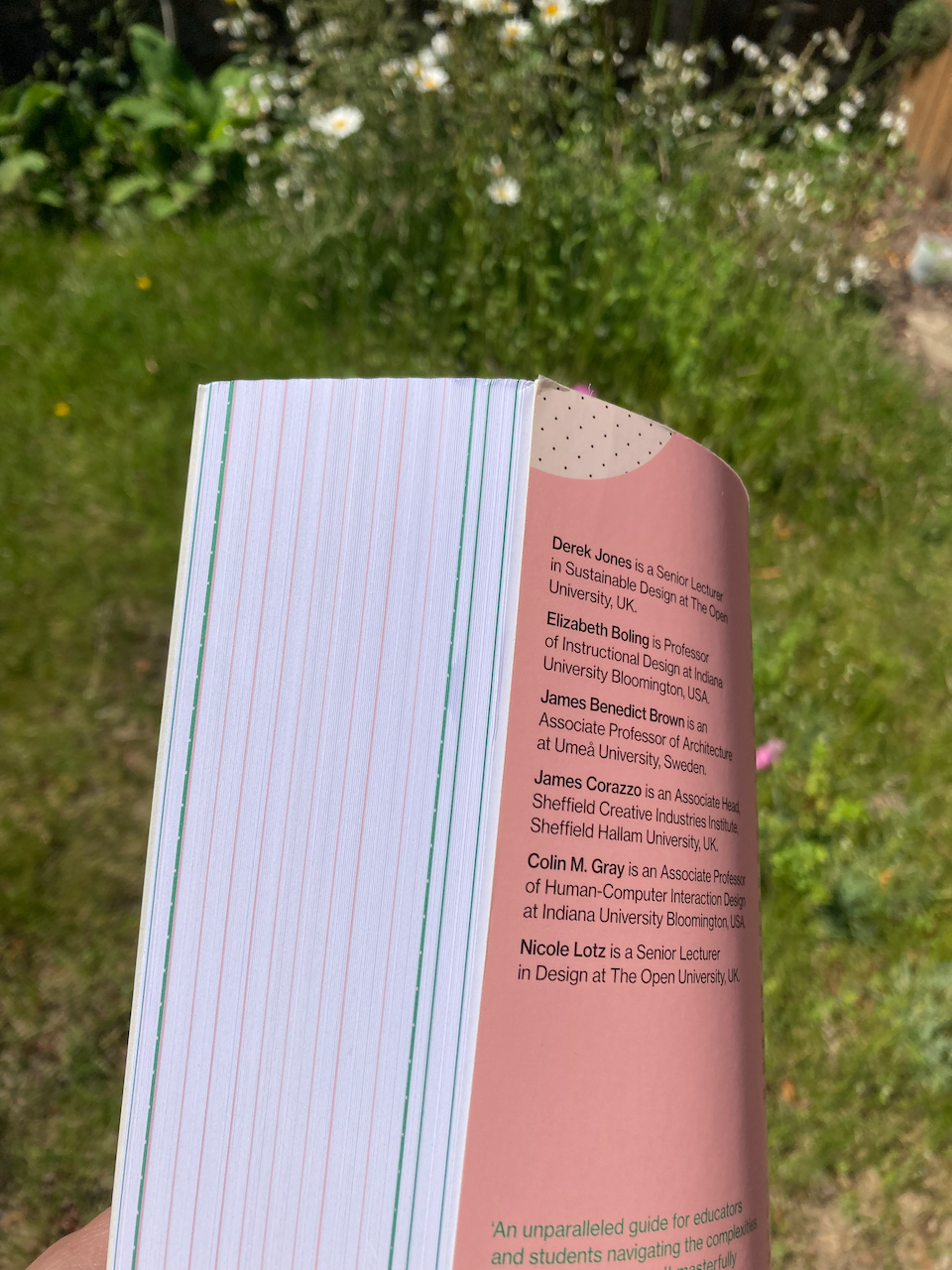
    For example, the way the pages fan and give a clue as to the big structure of the text is lovely. We’d had a notion of doing this from the start but the designers have pulled this off really nicely without it screaming at the reader or getting in the way.
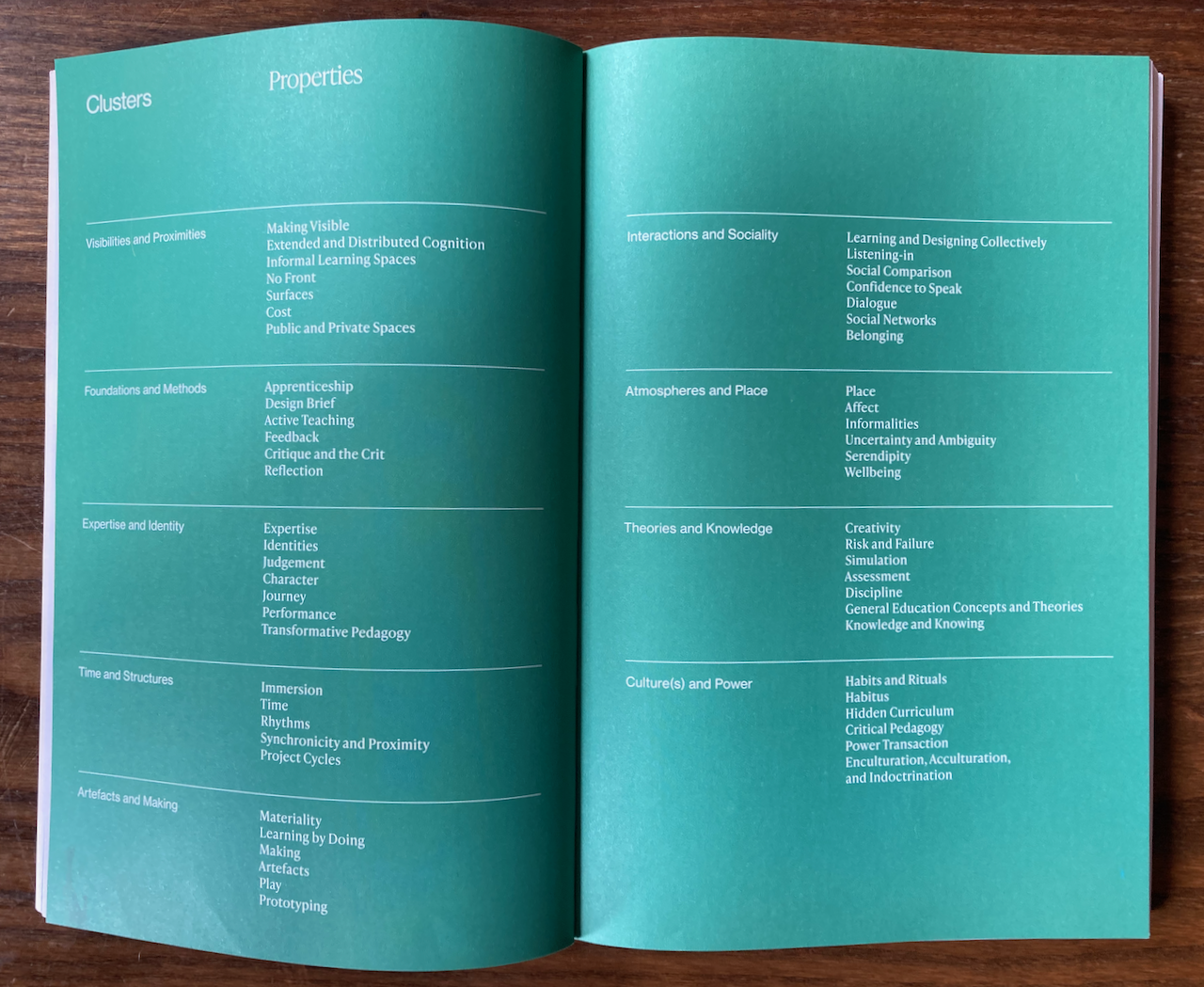
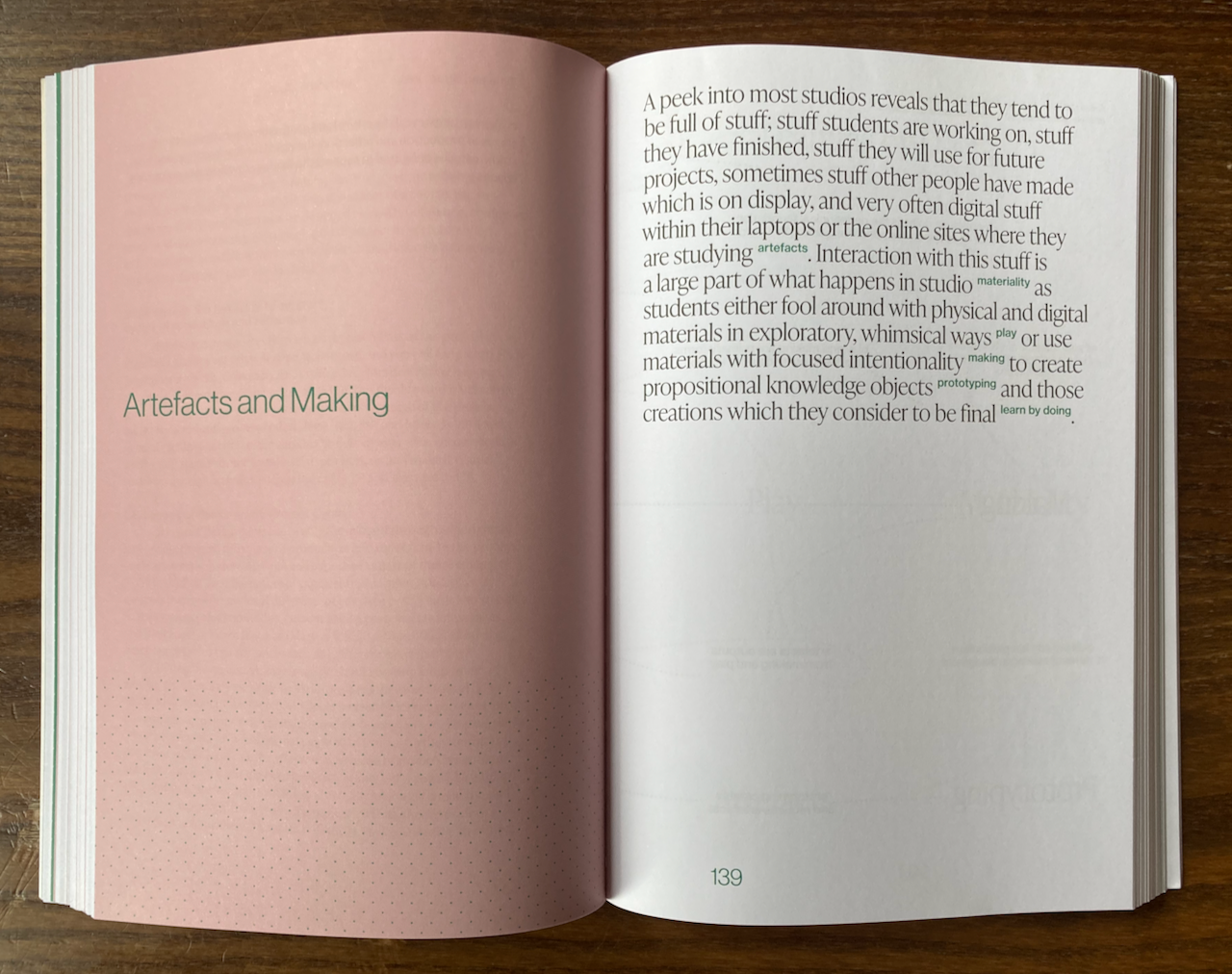
    That subtle pink that emerges when you flick through Studio Properties is tasty.

    Did I mention that it just looks good?
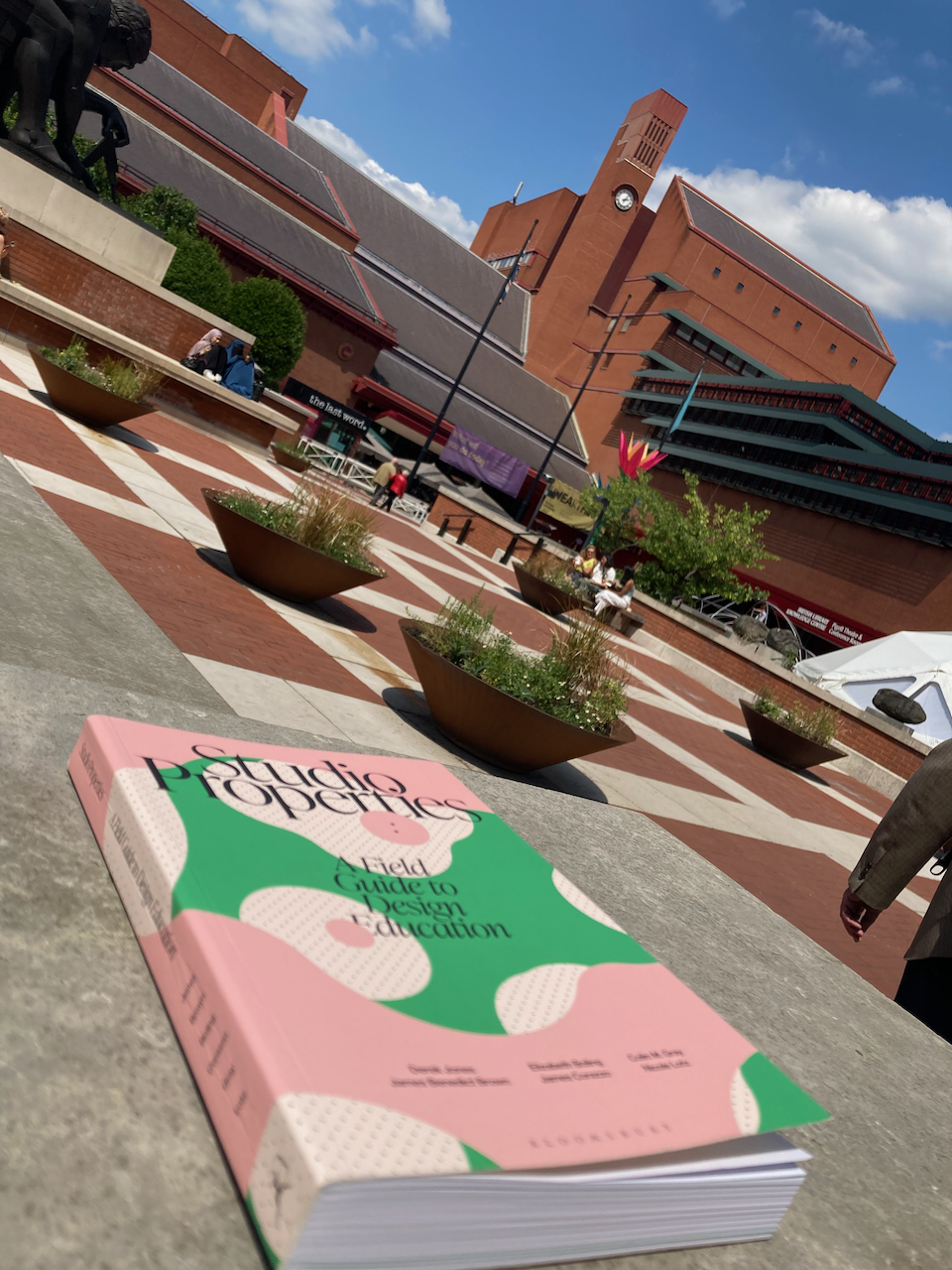
    Speaking of tasty, that pink on the cover is absolutely lickable.

    This is my word and both my fellow authors and spell checker do not like me using it. But I’m with the late Steve Jobs on this: making the book edible makes it touchable; acceptable; and delicious. (my only slight sadness is that the custard and rhubarb colour scheme I voted for was unanimously rejected… I defy you, enemies of progress!)

    Studio Properties is visually edible and digestible.

    It feels meaty

    Finally, I’d like to talk about heft. In the context of book design, I’m going to trademark the term Heft ™ as “The appropriate weight for a given set of content in a given knowledge context”.

    We had well over 100 properties at one point and, besides the wonderful Bloomsbury pointing out the 7 volume absurdity of this, I am glad we ended up with what we did. It’s a perfect starting point because it’s just right: it’s a lot of material but it doesn’t feel like too much (and I really love the spine design…).
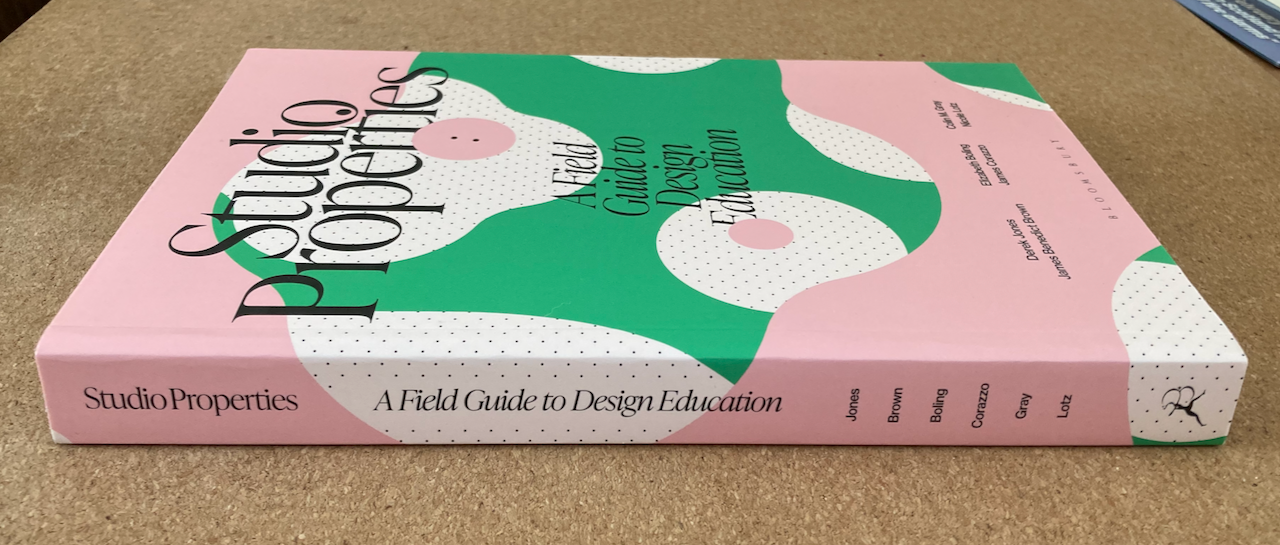
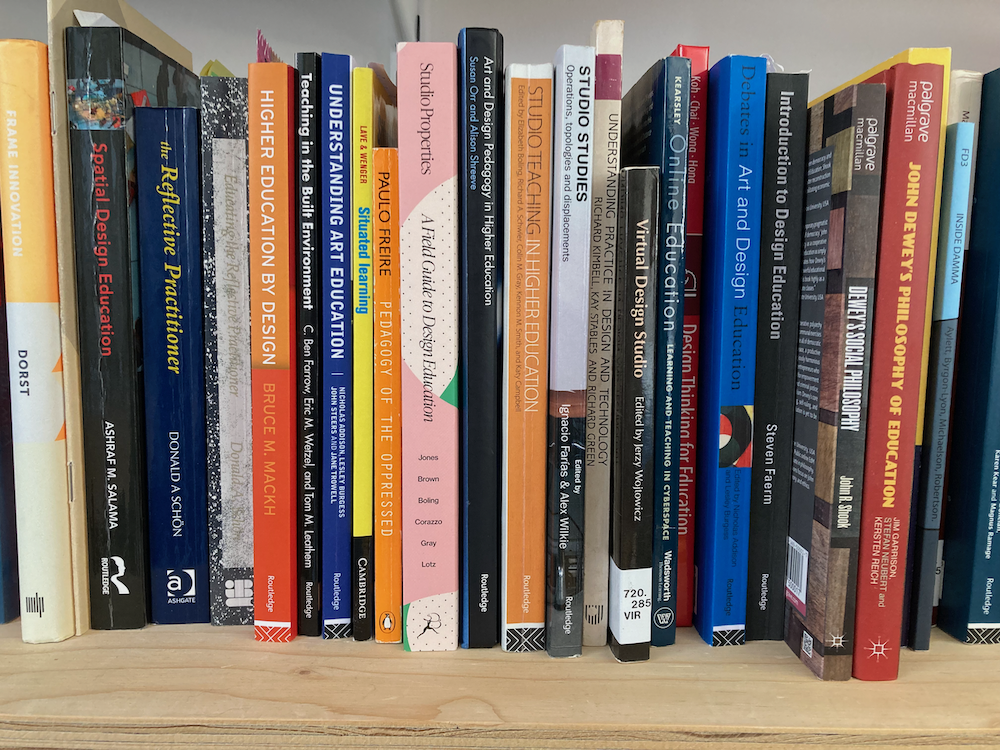
    Studio Properties has a Heft (and Girth) appropriate as to its position in design education research…


    OK, that’s probably enough now. I can hear the other authors at the door, begging me to stop typing and step away from the laptop.

    Buy a physical copy of the book if you can to truly appreciate the tastiness, digestibility, and heft of Studio Properties!

    Studio Properties is available to pre-order from Bloomsbury.
  • Defining studio (not)

    Defining studio (not)

    One of the biggest challenges in writing Studio Properties was trying to define studio without, well … defining it.

    Studio is made up from a whole set of tacit, cultural, and emergent bits and pieces that make it difficult to be explicit about. You cannot define or measure studio in certain ways, such as specifying how it should be formed with any confidence of outcome.

    At the same time, this very un-definability is often argued to be a key thing that makes studio what it is. Studio is not something created by following a set of explicit instructions; it is something that emerges from setting up initial conditions and then responding to situations along a set of guides, norms, cultures, and so on.

    So how do you balance saying something about something that cannot be defined?

    What we settled on was avoiding this question completely and basing the work on what others said about studio!

    OK, we didn’t completely avoid it. But having the Guiding Principle of using existing scholarship and research was an important part of the work.

    First, this gave us a condition to work to, allowing us to make progress without it being right or correct from the start. Instead, allowing judgement to be part of the definition of the knowledge itself.

    Second, it highlighted how much knowledge is already out there and that we’re not always aware of. We ended up citing 700+ articles, books, and other pieces of writing. The references section is nearly 10% of the book!

    For me, this last point was a real reminder that others have come before us and said a lot of useful stuff that should not just be ignored. (of course, there is also a lot of stuff that needs to be read with updates…).

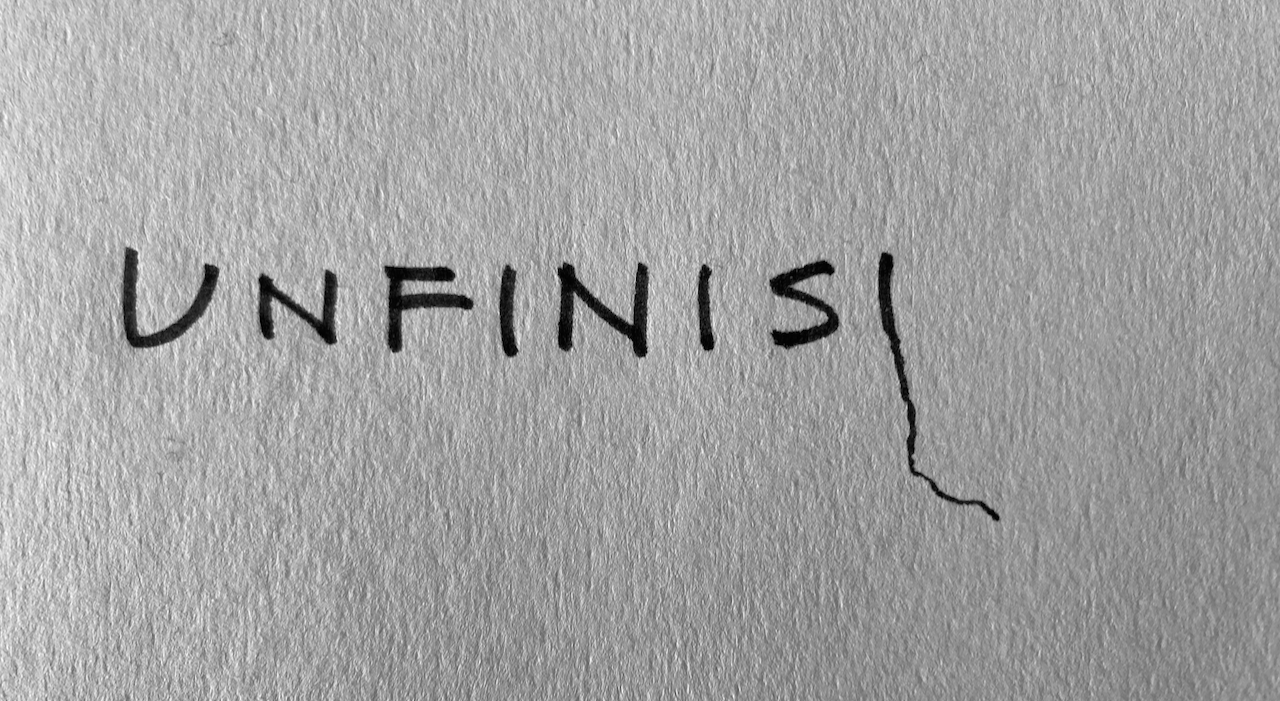
    Of course, it also means that this book is not a final thing either – Studio Properties is also the start of a studio in itself. It is not a definition and that means that it is also incomplete.

    Personally, that’s one the things I’m most looking forward to as an author: the fact that the work is unfinished and that other work might build on it, transform it, or even replace it.

    Or it might just be an early Pitch for Studio Properties 2 …

  • About the book: Contents

    The book comprises properties, clusters, and narratives. Properties describe things, events, interactions, or experiences in studio education. Clusters are groups of properties that are thematically related. Narratives offer a first-person account of studio, and have been created to provide insight into how properties interrelate, overlap and depend on one another.

    Each offers a different way to view, explore, and understand studio through its parts.

    To give you an idea of how these go together, here’s the list of properties and clusters from the book.

    Visibilities and Proximities

    Making Visible
    Extended and Distributed Cognition
    Informal Learning Spaces
    No Front
    Surfaces
    Cost
    Public and Private Spaces

    Foundations and Methods

    Apprenticeship
    Design Brief
    Active Teaching
    Feedback
    Critique and the Crit
    Reflection

    Expertise and Identity

    Expertise
    Identities
    Judgement
    Character
    Journey
    Performance
    Transformative Pedagogy

    Time and Structures

    Immersion
    Time
    Rhythms
    Synchronicity and Proximity
    Project Cycles

    Artefacts and making

    Materiality
    Learning by Doing
    Making
    Artefacts
    Play
    Prototyping

    Interactions and Sociality

    Learning and Designing Collectively
    Listening-in
    Social Comparison
    Confidence to Speak
    Dialogue
    Social Networks
    Belonging

    Atmospheres and Place

    Place
    Affect
    Informalities
    Uncertainty and Ambiguity
    Serendipity
    Wellbeing

    Theories and Knowledge

    Creativity
    Risk and Failure
    Simulation
    Assessment
    Discipline
    General Education Concepts and Theories
    Knowledge and Knowing

    Culture(s) and Power

    Habits and Rituals
    Habitus
    Hidden Curriculum
    Critical Pedagogy
    Power Transaction
    Enculturation, Acculturation, and Indoctrination

  • Serendipity

    Serendipity

    “In the elusive role of serendipity and the field of observation, chance favours only the prepared mind.” (Pasteur in Woods, 2014, p. 176)

    One of my favourite properties is Serendipity (p. 212).

    Partly because it’s one of those ‘obvious’ things that happens in studio every day: random encounters, discussions, and interactions that lead to new and interesting things

    But it’s also because Serendipity isn’t just a made up thing – it’s not just all about luck and chance and that’s all you can say about it. Serendipity has a practical definition based on some pretty interesting research and scholarship.

    And that’s what I think is important about Studio Properties as a book – it takes something that is slightly obvious or something we take for granted, and it shows that there’s a lot more to it than you might realise.

    Serendipity depends on two things and, without either: luck and preparedness. Without either of these it doesn’t work so well.

    What’s even more important is that we, as educators or designers, can do something about both of these.

    For luck, it is possible to increase the likelihood of something fortuitous taking place. One reason for studio existing is to increase this likelihood through seeing other work that might give you a new idea social comparison, a chance conversation dialogue, or even just the stuff that covers studio surfaces. The trick to this is ensuring that

    Preparedness is also something to that can be developed and cultivated. James Webb Young (2003) in his famous book on creativity dedicates an entire section on how designers prepare their minds long before they even start to approach an idea, often using some very basic activities: reading different books, trying new activities/hobbies, learning a new skill. In other words, by simply taking an active interest Learning by Doing and following up on their curiosity, a designer prepares their mind for the next serendipitous encounter.

    So, as a slightly cheeky self-citation (Williams et al., 2014, pp 29–31), here’s a list of examples of things you can do to Prepare your Mind for the next chance encounter:

    • Pick up a random magazine (yes, made from paper) and read it. All of it.
    • Judge a book by its cover: go to a library and BROWSE for a book that looks or feels nice. Be superficial an go with what looks good only. Then read it.
    • Have a “Say YES!” day.
    • Take an online course in some different subject.
    • Practise idea generation methods regularly for a month.
    • Have a Listening Day (where you say nothing about yourself and only listen to others).
    • Start a pet project that has nothing at all to do with what you normally do or even like.
    • Attend a public lecture at your local college, library, or university

    You can read the full Serendipity property below and you can buy the book (or get the full Open Access version) from the Bloomsbury website here.

    Jones, D., Boling, E., Brown, J. B., Corazzo, J., Gray, C. M., & Lotz, N. (2025). Studio Properties: A Field Guide to Design Education (1st ed.). Bloomsbury Publishing PLC.

    Williams, A., Jones, D., & Robertson, J. (Eds.). (2014). BITE: Recipes for Remarkable Research (1st ed.). Sense Publishers. http://oro.open.ac.uk/39586/

    Young, J. W. (2003). A Technique for Producing Ideas. McGraw-Hill.

  • Welcome to Studio Properties

    Welcome to Studio Properties

    Welcome to the Studio Properties website.

    There is something special about a studio as a place of practice and learning.

    That quote is from the back of the book, and it encapsulates many of the ideas and motivations behind Studio Properties.

    Studio is special because it has been maintained as a human practice for thousands of years. It’s a particular place and pedagogy that operates in a distinct way. However, as a place of practice and learning, it also evolves and adapts to those participating in it and the contexts in which it operates.

    That makes it both really complex and really simple. Complex because it’s people, place, values, cultures, customs, and the usual human stuff. Simple, because it is what it is, and educators just get on with educating the next generation of designers.

    So, writing a book that attempts to preserve both characteristics was an important challenge for us as authors. We hope we’ve found the right balance in how we’ve presented studio – as a series of properties, not as a definition.

    We hope you enjoy the book and find it as useful as we have in developing our studio teaching. If you have, then please get in touch to let us know.

  • The Association for Art History 2025 Conference, York. UK

    The Association for Art History 2025 Conference, York. UK

    James and Derek will be at the Association for Art History 2025 Conference

    When: 10 April 2025
    Event: The AAH 2025 Conference.
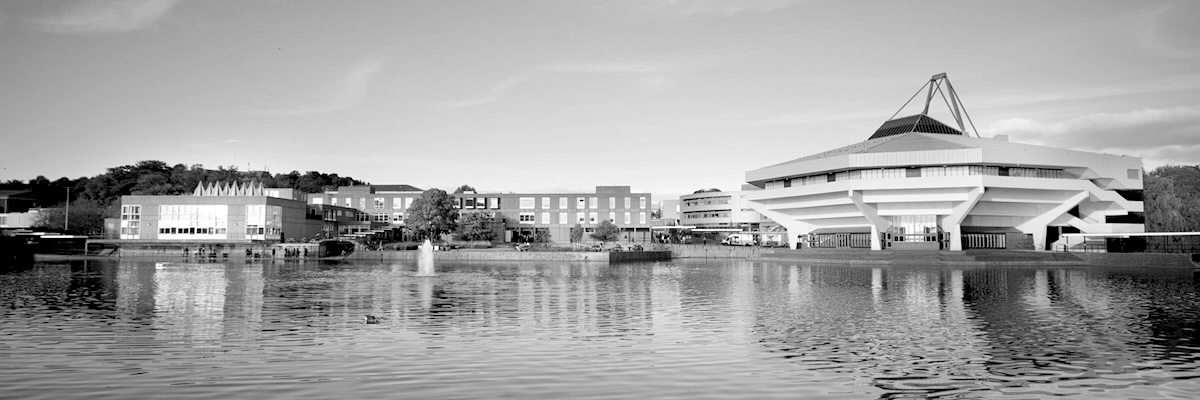
    Where: University of York, UK

    The talk will focus on the idea of studio as place and how that relates to studio as a pedagogy.

    We’ll also be trying out a new format to communicate the richness of studio (as place) and how that can then be explored using Studio Properties.

    Experimental academic modes of presentation … should be fine.

    The full abstract is below and we hope to see you in April!


    The Visibilities and Proximities of the Design Studio

    This paper examines the architecture of the design studio from a pedagogical perspective. It emphasises the critical interdependence of studio as place and studio as pedagogy, highlighting that one cannot be fully understood without considering the other. This observation arises from the project Studio Properties, an international collaboration of studio educators bringing together research and expertise to identify a series of studio properties. This paper identifies some of these properties [bold in square brackets] to probe how the design school’s architecture and pedagogy collaborate to produce particular kinds of learning. Walking into a studio teaching space is a different experience than walking into a lecture hall. It can be challenging to discern where the ‘front’ of the class might be when neither the room’s arrangement nor the occupants’ behaviour is oriented toward a single point of focus [no front]. The space may feel cluttered with objects lying around, materials stacked up, and work in progress stuck to walls [surfaces], on desks [extended and distributed cognition], and in service of [making visible]. Tutors and students don’t always stay in place; they visit each other’s workspaces, stand and discuss pinned-up sketches, and may even be gathered in unexpected corners, which are not always inside the studio [informal learning spaces]. Other students may be hidden away, working behind ad hoc privacy barriers [public and private space]. The emergent architecture of studio enables participants to use studio as a space to design with, not just design in.